
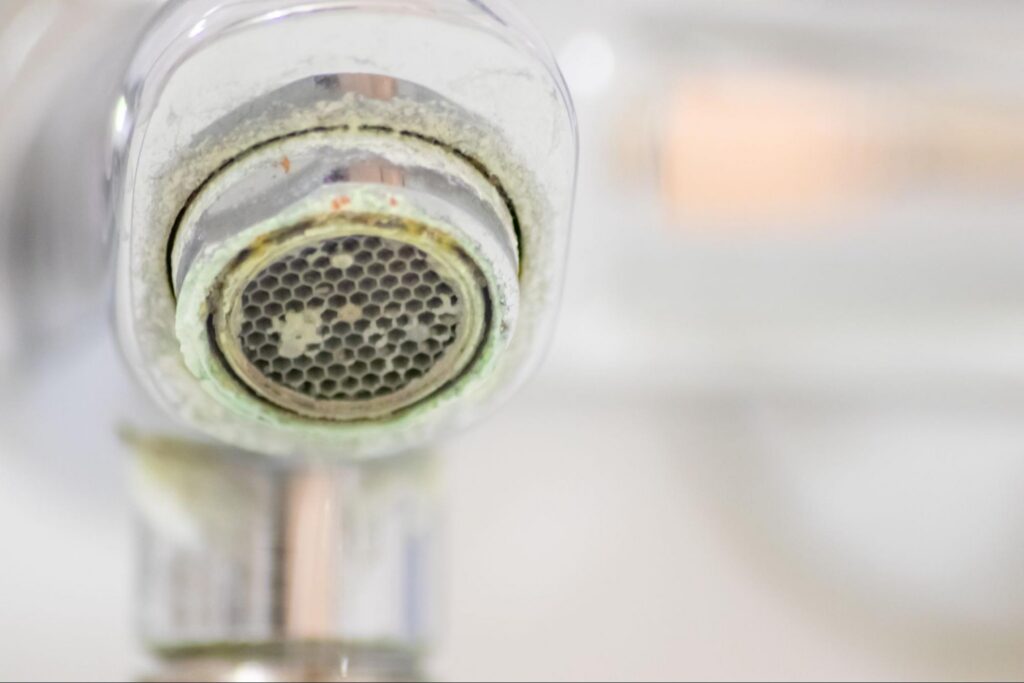
Hard water rarely announces itself. It moves quietly through a home’s plumbing system, leaving small deposits on fixtures, building up inside pipes, and slowly wearing down the appliances connected to the water line. By the time most homeowners notice, the damage has been forming for years.
The signs of hard water damage are easy to overlook because they often look like everyday wear. A faucet that takes longer to clean, a water heater that doesn’t perform like it used to, dishes that come out of the dishwasher already spotted. Each one points back to the same underlying cause: dissolved minerals in the water that gradually settle inside the system.
Below are the seven signs that most often appear in homes with hard water, what each one means for your plumbing, and the long-term costs that build up when the problem goes untreated.
What Hard Water Actually Does to a Home’s Plumbing System
Hard water is water that carries higher-than-average levels of dissolved minerals, primarily calcium and magnesium. These minerals enter the water supply naturally as it travels through rock and soil, then make their way into homes through both municipal lines and private wells.
The minerals themselves are not harmful to drink, but they behave differently once they reach a home’s plumbing. As water moves through pipes, heats up inside a tank, or evaporates on a surface, those minerals separate from the water and bond to whatever they come into contact with. The result is a chalky residue called scale.
Scale builds slowly, but its effects spread across the entire plumbing system over time:
- Water flow gradually drops as mineral deposits narrow the inside of pipes
- Hot water tanks lose efficiency and wear out earlier than their expected lifespan
- Fixtures, faucets, and connected appliances show premature wear
- Soap, detergent, and cleaning products become noticeably less effective
The damage is cumulative rather than catastrophic. Most homeowners don’t notice until several parts of the system start showing wear at the same time, which is where a properly sized water softener becomes the most direct way to stop new buildup before it spreads further.
7 Signs of Hard Water Damage Most Homeowners Miss
The early signs of hard water damage usually show up in everyday parts of the home before they reach the plumbing system itself. Recognizing them sooner gives you more options when it comes to addressing the underlying cause.
1. Limescale Buildup on Faucets, Showerheads, and Fixtures
A white, chalky film on faucets and showerheads is one of the most visible signs of hard water in a home. The same buildup is also forming on every other surface the water touches, including the inside of fixtures themselves. Once scale settles into the small openings of a showerhead or aerator, flow becomes uneven and harder to clean. Wiping down the outside helps in the short term, but it doesn’t reach what’s happening inside.
2. Cloudy Glassware and Mineral Spots on Dishes
Glasses that come out of the dishwasher with a hazy film or white spots are reacting to mineral residue in the water. When hot water evaporates from a glass, the calcium and magnesium it carries stay behind. Repeated exposure can etch glassware in a way that doesn’t come out, especially on thinner stemware.
3. Soap That Won’t Lather, and What It Does to Your Skin
Soap, shampoo, and detergent all need to break down properly to clean well. Hard water reacts with the cleaning agents in those products and limits how much they can lather, which is why the same shampoo can feel completely different from one home to the next. Skin and hair end up coated with a thin film of mineral residue and unrinsed soap, which is often what’s behind dry, tight skin and dull-looking hair. Many homeowners adjust to it without realizing hard water is the cause.
4. Stiff Towels and Faded Fabrics After Laundry
Clothes and towels washed in hard water tend to feel rough and look duller over time. Mineral particles get trapped in fabric fibers instead of rinsing out fully, which shortens the lifespan of the material. Colors fade faster and detergent has to work harder to do the same job.
5. A Water Heater That Works Harder and Fails Sooner
Hard water has one of its biggest effects on hot water tanks, and it’s often the sign that pushes homeowners toward asking whether they need a water softener. Sediment from calcium and magnesium settles at the bottom of the tank and on the heating elements, forming a layer of scale that water has to push through before it gets hot. The system uses more energy to reach the same temperature, runs longer, and wears out earlier than it should.
Most hard water homes see their hot water tanks fail several years before the manufacturer’s expected lifespan. That gap shows up first on the energy bill and eventually on the replacement invoice.
6. Reduced Water Pressure From Scale Inside the Pipes
Hard water damage to pipes is one of the harder problems to catch early because it develops out of sight. As mineral deposits thicken along the inner walls of a pipe, the space water can flow through becomes smaller, and pressure drops at the tap. This usually develops slowly enough that homeowners don’t notice until the difference is significant.
Older galvanized pipes are particularly vulnerable. Their interior surfaces are rougher, which traps minerals more easily and accelerates the buildup process compared to copper or PEX.
7. Appliances Failing Before Their Expected Lifespan
Dishwashers, washing machines, and refrigerators with ice or water lines are all connected to the same water supply affecting the rest of the home. Hard water shortens the operating life of every appliance it touches. Inlet valves clog, pumps wear faster, and heating elements overwork. When several appliances start showing problems within a short window of each other, water quality is often the connecting factor rather than coincidence.
What Hard Water Damage Is Actually Costing You
The financial weight of hard water damage doesn’t show up in a single bill. It spreads across higher utility costs, earlier appliance replacements, and the products homeowners buy to fight the symptoms. According to research published by the Water Quality Association, scale buildup gradually reduces hot water tank efficiency, which compounds across every year the system runs and shortens its lifespan.
The same pattern plays out across the rest of the home. Dishwashers and washing machines in untreated hard water homes commonly fail several years before their expected end-of-life. Detergent, soap, and cleaning product use rises noticeably. Fixtures need replacement more often, and plumbing repair calls trend upward in homes where scale has narrowed the inside of pipes.
Each of these costs feels small on its own. Stacked across a decade, they often add up to thousands of dollars in spending that softened water would have prevented.
How Hardness Varies in Scottsdale and Wenatchee Homes
Water hardness isn’t a single number across the country. It depends on where the water comes from, what minerals it picks up along the way, and how it’s treated before reaching your home. Two of the areas A&N Plumbing serves, Scottsdale and Wenatchee, sit at very different ends of that spectrum.
The table below outlines how water characteristics compare between our two service areas:
| Water Characteristic | Scottsdale, AZ | Wenatchee, WA |
|---|---|---|
| Typical hardness range | 12 to 17 grains per gallon | Variable, often 3 to 12+ gpg by source |
| Hardness classification | Very hard | Moderately soft to hard |
| Primary water source | Central Arizona Project canal, Salt and Verde River systems | Municipal supply or private wells |
| Most common damage pattern | Heavy scale on fixtures and water heaters | Scale plus iron and sediment in well-fed homes |
| Best-fit solution | Whole-home water softener | Softener, filtration, or combined system |
For Scottsdale homeowners, hard water is a constant. City water consistently tests in the very hard range, and most homes see heavy scale within a few years without treatment. The same conditions hold across much of the East Valley, including Mesa and Chandler, since these areas all draw from the same Central Arizona Project supply. A whole-home softener is typically the right fit, which is why most of our Scottsdale water softener installations are sized to handle the area’s mineral-heavy water.
For Wenatchee homeowners, conditions vary more from one home to the next. Municipal supply typically runs softer, while private wells across the surrounding valley can carry both hardness minerals and other contaminants like iron or sediment. Our Wenatchee water filtration installations are matched to each home’s water source after testing, since the right setup depends on what’s actually coming through the tap.
Some nearby communities trend consistently harder than Wenatchee itself. Entiat in particular shows high mineral content that drives steady demand for water softener installation, and homes in Leavenworth and Orondo see similar patterns depending on the source.
The signs of hard water damage look similar across all of these areas, but the rate of wear and the right solution depend on the home’s water source and how heavily it’s affected.
How to Confirm Hard Water Is the Cause
Confirming hard water doesn’t take a complicated process, but the method you use changes how reliable the results are. Three options cover the range from quick check to thorough analysis:
- Soap and bottle test. Fill a clear bottle about a third of the way with water, add a few drops of pure liquid soap, and shake it. Water that produces only thin bubbles and a cloudy film likely contains higher mineral levels. This works as a first-look check but doesn’t give a specific hardness number.
- Hardness test strips. Available at most hardware stores and simple to use, these strips report results in grains per gallon or parts per million. The readings are reliable enough to confirm hard water and give a general sense of severity, though they don’t capture other water quality factors.
- Professional water quality test. The most thorough option. It measures hardness alongside total dissolved solids, iron content, pH, and chlorine levels. A&N Plumbing uses this approach before recommending any water treatment system, because hardness alone doesn’t always tell the full story of what’s in a home’s water.
If you’ve spotted several of the signs covered earlier and want a definitive answer, a professional test gives the clearest picture and sets up the right next step.
How to Stop Hard Water Damage From Getting Worse
The damage caused by hard water doesn’t reverse on its own. Scale that has already formed inside pipes, hot water tanks, and appliances stays in place until it’s mechanically removed or until the affected component is replaced. What treatment can do is stop new damage from continuing to develop.
A whole-home water softener is the standard solution. Softeners use a process called ion exchange to remove calcium and magnesium minerals from the water before they can settle inside the rest of the plumbing system. With softened water flowing through the home:
- Fixtures stay cleaner
- Appliances last longer
- Hot water tanks operate closer to their intended efficiency
In homes where water also carries iron, sediment, or other contaminants beyond hardness, a water filtration system may be added alongside the softener. The right combination depends on what a water quality test reveals, which is why an evaluation comes before any installation. A&N Plumbing approaches every water softener installation and repair as part of the full plumbing system, so the configuration fits how the home actually uses water.
Frequently Asked Questions About Hard Water Damage
Is hard water dangerous to drink?
Hard water is not considered a health risk. The minerals it carries, mostly calcium and magnesium, are also found in many foods. The damage shows up in plumbing systems, not in the people drinking it.
Can hard water damage be reversed once it has started?
Existing scale doesn’t disappear after a softener is installed. Some scale can be removed by descaling fixtures, flushing hot water tanks, or replacing affected components. The role of a water softener is to stop new damage from forming, so the system can stabilize.
How quickly does hard water damage show up in a home?
Visible signs like fixture scale or cloudy glassware can appear within months. Damage to pipes, appliances, and hot water tanks develops over years. The timeline depends on the home’s hardness level, the age of the plumbing, daily water usage, and whether any treatment is already in place.
Does a water softener actually prevent hard water damage?
A properly sized water softener removes the minerals responsible for scale before they reach the home’s plumbing. Once installed, new buildup stops forming, and appliances, hot water tanks, and fixtures are protected from further mineral wear.
Do I need a water filtration system if I already have a water softener?
Water softeners and water filtration systems handle different issues. A softener removes hardness minerals like calcium and magnesium, while a water filtration system targets contaminants like sediment, chlorine, iron, and certain organic compounds. In homes where water carries both hardness and other quality issues, pairing the two often gives the most complete result. A water quality test reveals which combination, if any, fits the home.
How long does it take to notice the difference after installing a softener?
Most homeowners notice changes within the first week. Soap lathers more easily, skin and hair feel different after showering, and water spots stop appearing on glassware. Long-term protection of pipes and appliances develops over months and years.
Is hard water dangerous to drink?
Hard water is not considered a health risk. The minerals it carries, mostly calcium and magnesium, are also found in many foods. The damage shows up in plumbing systems, not in the people drinking it.
Can hard water damage be reversed once it has started?
Existing scale doesn’t disappear after a softener is installed. Some scale can be removed by descaling fixtures, flushing hot water tanks, or replacing affected components. The role of a water softener is to stop new damage from forming, so the system can stabilize.
How quickly does hard water damage show up in a home?
Visible signs like fixture scale or cloudy glassware can appear within months. Damage to pipes, appliances, and hot water tanks develops over years. The timeline depends on the home’s hardness level, the age of the plumbing, daily water usage, and whether any treatment is already in place.
Does a water softener actually prevent hard water damage?
A properly sized water softener removes the minerals responsible for scale before they reach the home’s plumbing. Once installed, new buildup stops forming, and appliances, hot water tanks, and fixtures are protected from further mineral wear.
Do I need a water filtration system if I already have a water softener?
Water softeners and water filtration systems handle different issues. A softener removes hardness minerals like calcium and magnesium, while a water filtration system targets contaminants like sediment, chlorine, iron, and certain organic compounds. In homes where water carries both hardness and other quality issues, pairing the two often gives the most complete result. A water quality test reveals which combination, if any, fits the home.
How long does it take to notice the difference after installing a softener?
Most homeowners notice changes within the first week. Soap lathers more easily, skin and hair feel different after showering, and water spots stop appearing on glassware. Long-term protection of pipes and appliances develops over months and years.
Protect Your Home’s Plumbing From the Long-Term Effects of Hard Water
Hard water damage builds slowly enough that most homeowners don’t recognize the signs until the wear has spread through several parts of the plumbing system. Catching it earlier keeps the response simpler, less expensive, and less disruptive to daily life.
If you’ve noticed the patterns described in this guide, the next step is finding out what your water actually contains. A water quality test gives a clear picture of hardness levels and any other factors that might be affecting your home’s plumbing. From there, the right treatment system can be matched to your home rather than chosen by guess.
Contact A&N Plumbing to schedule a water quality evaluation and walk through what your home’s water actually needs.