
A camera inspection replaces guesswork with footage of the actual pipe, so a repair can be aimed at the real problem instead of the most likely one.
For most homeowners, the first real sign is a Sunday backup that clears after a plunger and some patience. The drain behaves for a few months, then does it again. That pattern shows up a lot in Wenatchee’s older neighborhoods. The median house here was built in 1977, and plenty still run on the sewer line they came with, often clay pipe laid in short sections with joined seams. Decades of ground settling work those seams apart, and once a gap opens, roots and debris find it.
None of that is visible from the yard. A line can drain normally for years while it narrows or shifts a few feet down. A Wenatchee sewer camera inspection sends a waterproof camera through the pipe and puts live video on a monitor, so you can see the condition of the line for yourself.
A&N Plumbing runs these inspections for homeowners tired of the same recurring backup and for buyers who want to know what they are inheriting before closing. Both have the same stake in it. In Wenatchee, the homeowner owns and maintains the side sewer for its full length, all the way to the city main.
The camera goes in through an access point, usually a cleanout near the foundation. From there it travels the length of the line while the technician watches the feed and notes what changes: where the pipe narrows, where a joint has separated, where water stops moving the way it should. Older Wenatchee homes do not always have an accessible cleanout. When that happens, the camera may need to go in through a pulled toilet instead, which adds a little time to the visit. That is worth knowing before the appointment rather than during it.
The camera head also carries a locator. When something turns up, the technician can mark its depth and its position from the surface, so a repair gets dug in one spot instead of a trench that follows a guess. In a valley built on deep sand and gravel deposits, where the ground has had decades to settle, knowing the exact spot matters more than knowing the general direction.
What you come away with is a record rather than an opinion. Most inspections end with a walkthrough of the footage and a plain summary of the line’s condition, including the sections holding up fine. If the trouble turns out to be in a branch line inside the house rather than the main sewer, that is a drain camera inspection, which is a different job with a different approach.
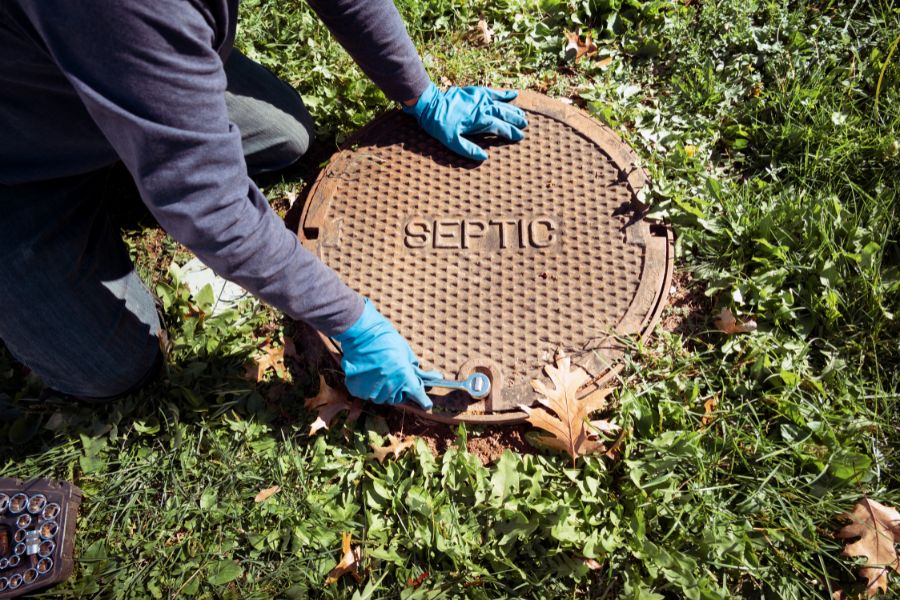
Not every camera inspection is looking for the same thing. The equipment is largely the same, but the reason for the inspection changes where the camera goes and what the video needs to answer.
If you are not sure which one fits, that is a normal place to start. Describing what you are seeing, a recurring backup, a slow tub, a house you are about to buy, is usually enough to sort out which inspection makes sense.
Most sewer problems fall into a handful of categories, and the footage usually makes clear which one you are dealing with.
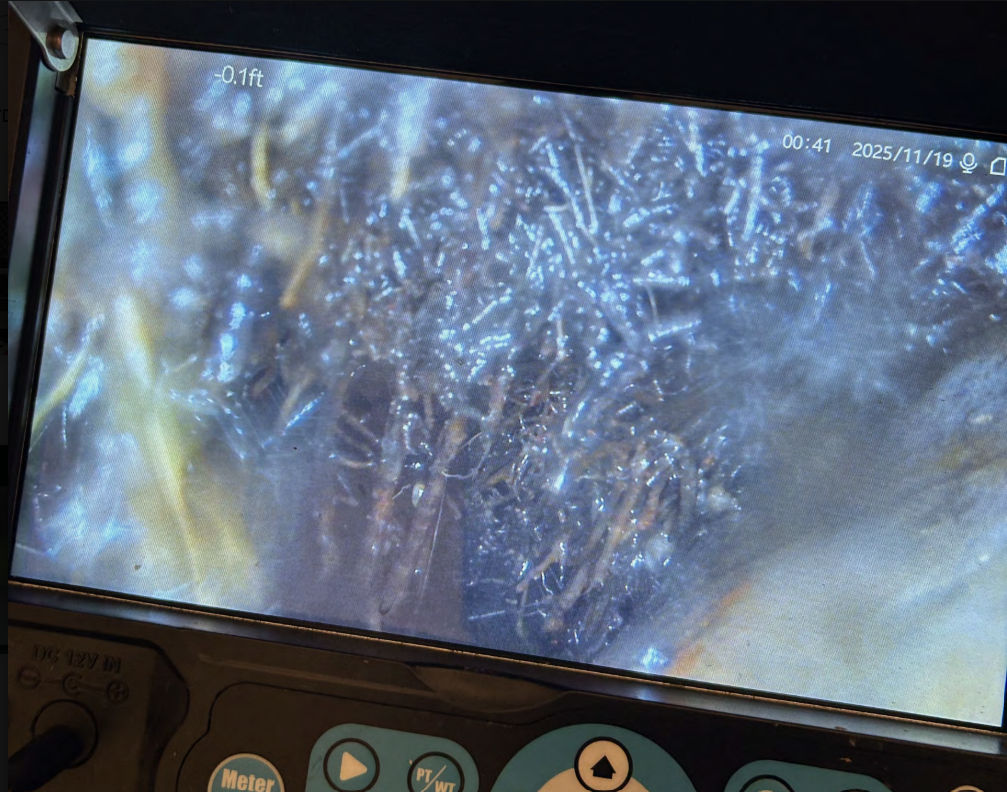
Roots cause more sewer blockages than any other single problem. They follow moisture, and a hairline gap at a pipe joint is all the opening they need. Early on, the footage shows a few fine strands crossing the line. Left alone, those strands thicken into a mat that catches grease, paper, and everything else moving past, until the pipe is doing a fraction of the work it was built for. Jointed clay is far more vulnerable to this than newer sealed runs.
A camera is the only practical way to confirm structural damage without digging. Clay cracks. Cast iron corrodes from the inside until the wall thins and flakes away. An offset means two sections have stopped lining up, usually because the ground beneath them moved. The Wenatchee Valley sits on deep sand and gravel left behind by ancient floods, worth remembering when a line has been buried for fifty years.
A belly is a low spot where the pipe has sagged and water stops moving through. Waste settles in the dip, so the same spot clogs again and again.
Not every blockage is structural. Grease, soap scale, mineral deposits, and flushed wipes collect along the pipe wall and narrow the opening a little at a time. The footage shows how much of the pipe is still open, which is what separates a line that needs cleaning from a line that needs repair. When it is the former, hydro jetting is usually the answer.
The camera also confirms what the line is made of and where it runs. Clay, cast iron, Orangeburg, and PVC each age differently and each open different repair options. For a buyer, this is often the most useful thing the footage answers.
Any one of these can develop quietly for years before a symptom reaches the house. A line with partial root intrusion may drain normally most of the time and back up only occasionally, which makes the real cause easy to miss until someone looks.

A few situations point toward an inspection as the sensible next step:
When several fixtures slow down at once, the restriction is usually in the main line rather than in any one drain. That is the difference between a problem a plunger can reach and one that needs a look at the whole run.
Buyers and sellers are the other common case. A standard home inspection does not cover the sewer line, so unless someone orders a sewer scope separately, the condition of that pipe stays unknown through closing. In a market with this much older housing, that is a real gap. Sellers request the same footage for the opposite reason, gathering it early so a problem gets handled on their schedule instead of during negotiations.
If any of that sounds familiar, A&N Plumbing can inspect the line and walk you through what the footage actually shows.
A lot of inspections stop at the first thing the camera finds. Ours run the full length of the line, because a root mass twenty feet out does not rule out a belly at sixty, and finding only the first problem is how a homeowner ends up paying for the same repair twice. A&N Plumbing has been family-run and working in this valley since 2015.
You will hear what the footage shows in plain language, including when the answer is that the line is in good shape. Some inspections end with monitoring instead of a repair, and that is a legitimate result. An inspection is there to answer a question, not to sell a repair.
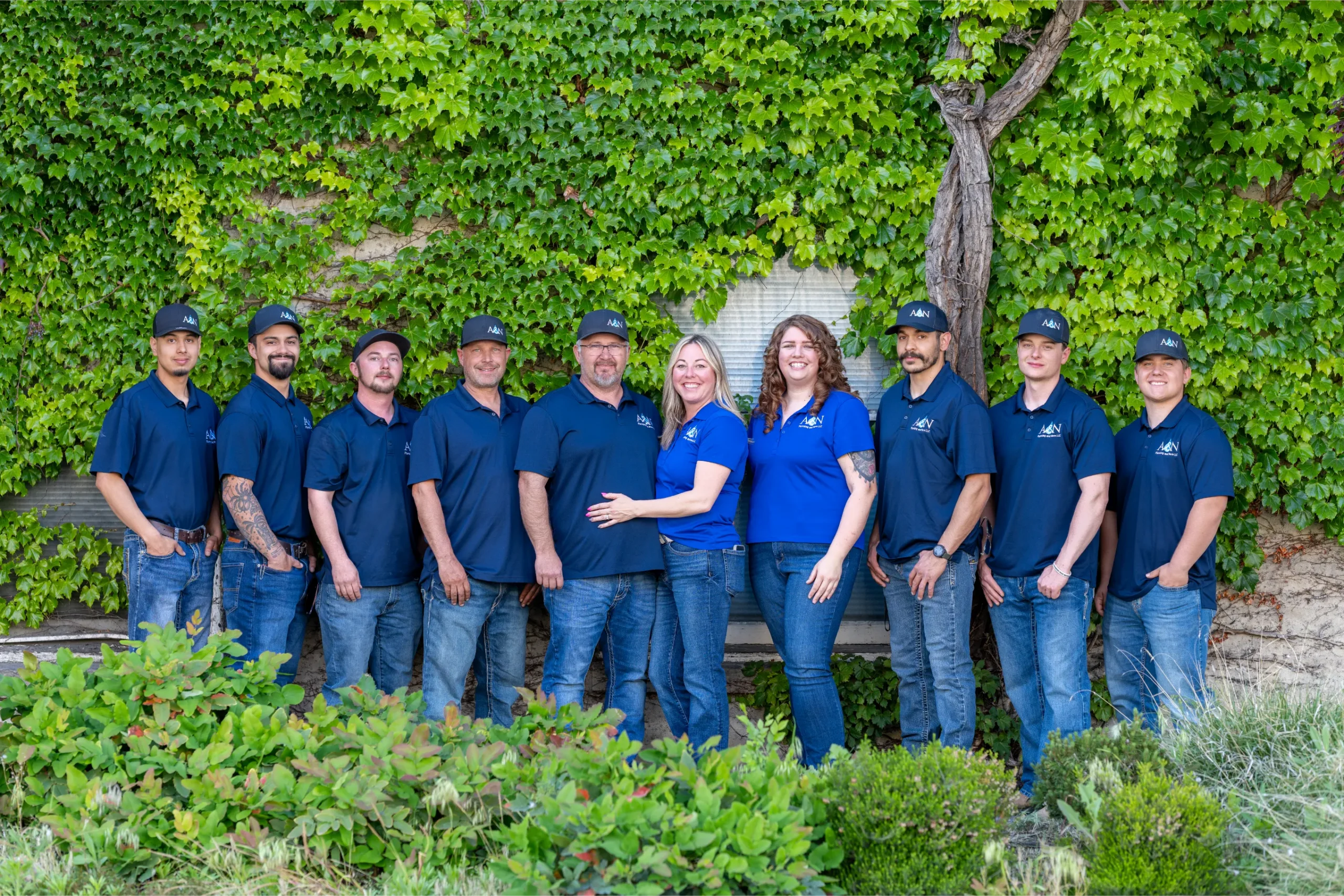
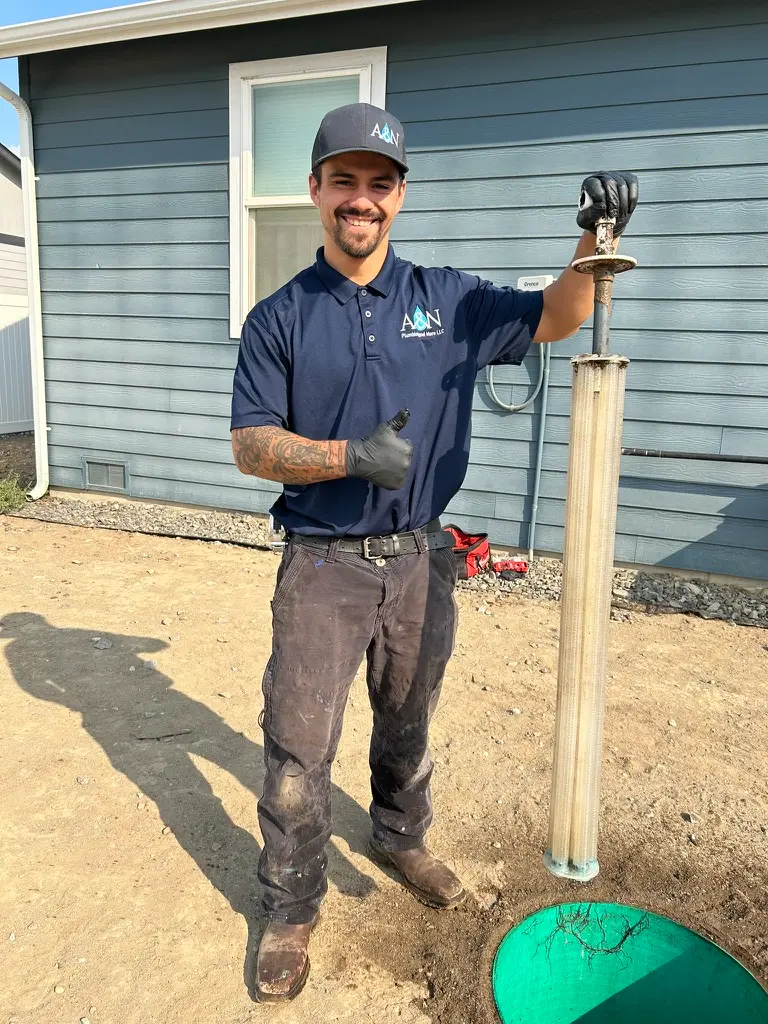
A&N Plumbing performs sewer camera inspections across Wenatchee, including the older streets near the city center, South Wenatchee and Appleyard, West Wenatchee, and the neighborhoods around Wenatchee Valley College. We also cover East Wenatchee, Cashmere, Rock Island, Malaga, and Monitor.
What the camera finds tends to track with when a neighborhood was built. On the older streets, the pipe is jointed and the trees planted alongside it have had fifty or sixty years to reach full size, and root intrusion is the usual suspect. Sunnyslope and the newer developments run mostly modern pipe, so the problems there look different: settling that leaves a low spot in the line, debris left behind during construction, or buildup in a house that has been on the same fixtures for twenty years. The camera answers the same question either way.
Pricing comes down to the length of the line and how the camera gets into it. A&N Plumbing quotes the inspection up front, before anything starts. If the footage turns up a problem, the repair is quoted separately, so you are not agreeing to work before you have seen the reason for it.
Most residential inspections take under an hour. Line length is the main variable, and a longer run out to the street takes more time to cover. It is a single visit, not a multi-day process.
Not directly. The camera shows the inside of the pipe, so it finds the cracks, holes, and separated joints that leaks come through, but it cannot see water escaping into the soil outside the line. In practice that is usually enough, because the damage and the leak are in the same place.
Usually the line has to be cleared first. A camera cannot see through standing water or a solid blockage, so running the inspection after clearing gives a far more useful picture. Doing both in one visit shows what was blocking the line and why it happened.
Yes, and it often changes the repair. Footage is what determines whether a damaged section can be relined from the inside or whether it has to be dug up and replaced. Without seeing the pipe, that decision gets made on assumption, and the two approaches differ a lot in cost and disruption.
A recurring backup and a pending home purchase are different problems, but they call for the same first step. Seeing the line takes the guesswork out of whatever comes next, whether that turns out to be a repair, a cleaning, or nothing at all.
Call (509) 888-1933 or reach us through our contact page to get on the schedule. A&N Plumbing inspects sewer lines throughout Wenatchee and the surrounding valley.