Call for Conditions & Restrictions


A slow drain clears, runs fine for a few months, then backs up again. That repeating pattern is what usually brings Scottsdale homeowners to look closer at the sewer line, and it tells you more than any single backup does. When the same line keeps failing, the cause generally sits well past the reach of a plunger or a hand snake.
Ground conditions here play a part. Much of Scottsdale sits on caliche, a hard layer of soil cemented together by natural calcium deposits, mixed with sand, decomposed granite, and pockets of clay that expand and contract. That clay swells when it takes on water and shrinks as it dries, and the monsoon season from mid-June through September repeats the cycle every year. Monsoon rain is not the main reason a sewer line fails, but over many years the movement contributes to settling, separated joints, and low spots that hold water.
A sewer camera inspection answers the question directly, and it is where A&N Plumbing starts when a line keeps causing trouble. Instead of guessing from symptoms above ground, the inspection puts a live view inside the pipe. Whether the concern is a drain that will not stay clear, an older line nobody has ever looked at, or a home sale that calls for a clean report, the footage is what makes the next step obvious.
An inspection is worth scheduling once a problem repeats, rather than after a single backup. You get the footage and a written estimate from the same visit, so the decision stays yours to make with real information.
The symptoms all look alike. A slow tub, a gurgling toilet, a smell that comes and goes: each one can point to a dozen causes sitting anywhere between the house and the city connection. A root mass forty feet out and a sagging section fifteen feet out produce the same complaint at the fixture, and they call for completely different repairs.
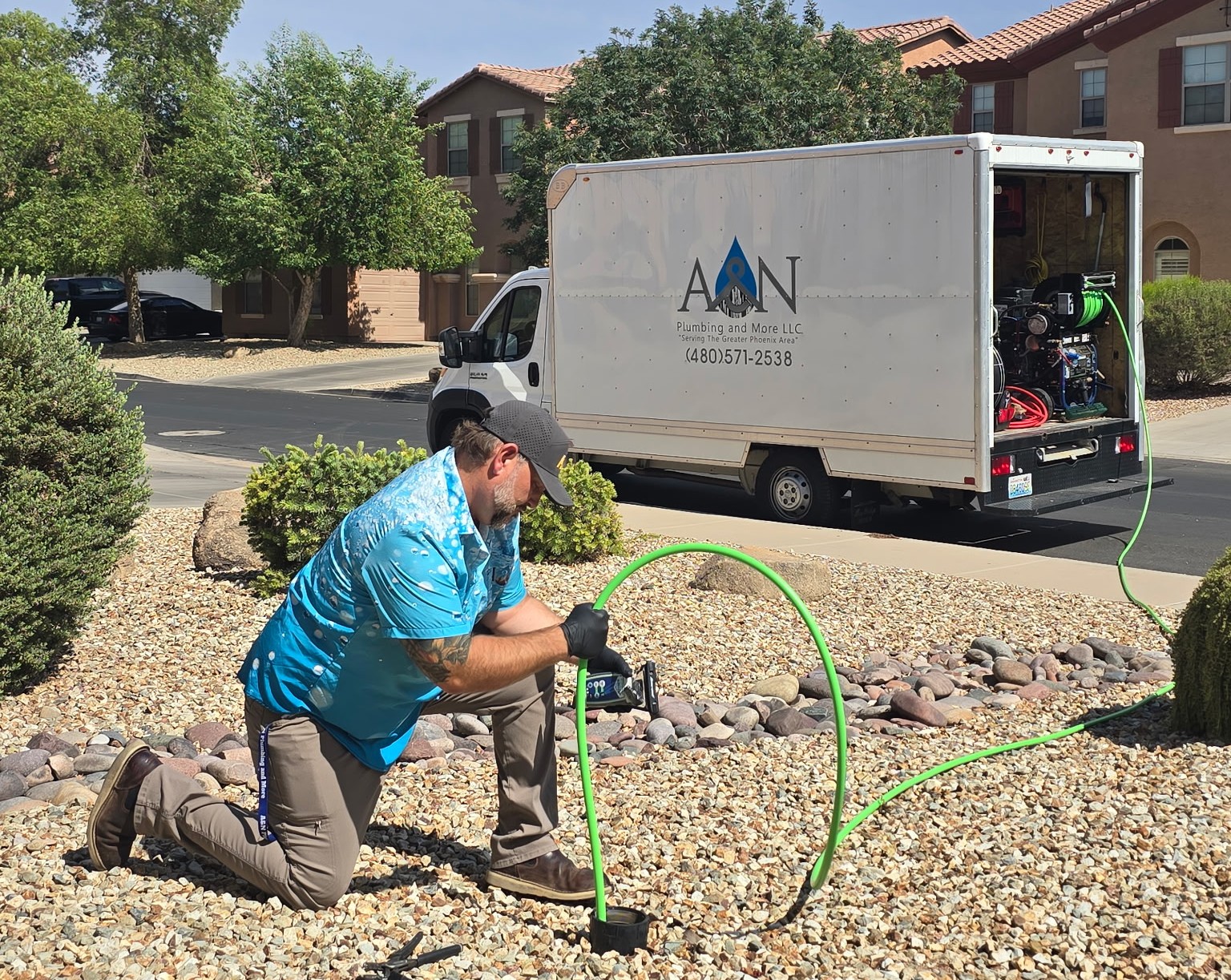
A sewer camera inspection removes the guess. A flexible, waterproof camera goes in through an existing cleanout and runs the length of the line while a monitor shows the live feed, so nothing gets dug up just to find the problem. That matters more here than most places. Caliche is slow and expensive to excavate, and plenty of Scottsdale yards are finished with pavers, decorative rock, and mature desert plantings that do not go back the way they came out. The footage settles the size of the job too. Sometimes the pipe is sound and the problem is buildup, which drain cleaning and clearing handles on its own. Sometimes there is a crack, a separated joint, or a low spot holding water, and the repair gets planned around what the camera found.

No matter the problem, our Arizona, AZ experts will determine what needs to be repaired before any work is done, so you know exactly what solution is best for your home’s or business’ plumbing & drains.
Camera inspections get named a few different ways depending on which line is being checked and why. The labels matter less than picking the right starting point, so here is what each one covers.
The right choice usually becomes obvious once the situation gets described. A drain that keeps backing up points one direction, a home under contract points another, and a line that was just repaired points to a third.
Sewer line problems build gradually. A line usually gives warning for months before it fails outright, and each sign is easy to write off on its own. The pattern is what matters.
One clog is a clog. The same clog three times in a year is a symptom. When a drain clears and then backs up again on roughly the same schedule, something in the line is catching debris and holding it. Clearing the blockage without finding the cause just resets the clock.
Gurgling means air is moving where it should not be, usually around a partial blockage. Sewer odor that comes and goes points to a break in the line or a dry trap. When more than one fixture slows down at the same time, the problem has moved past the individual drain and into the main.
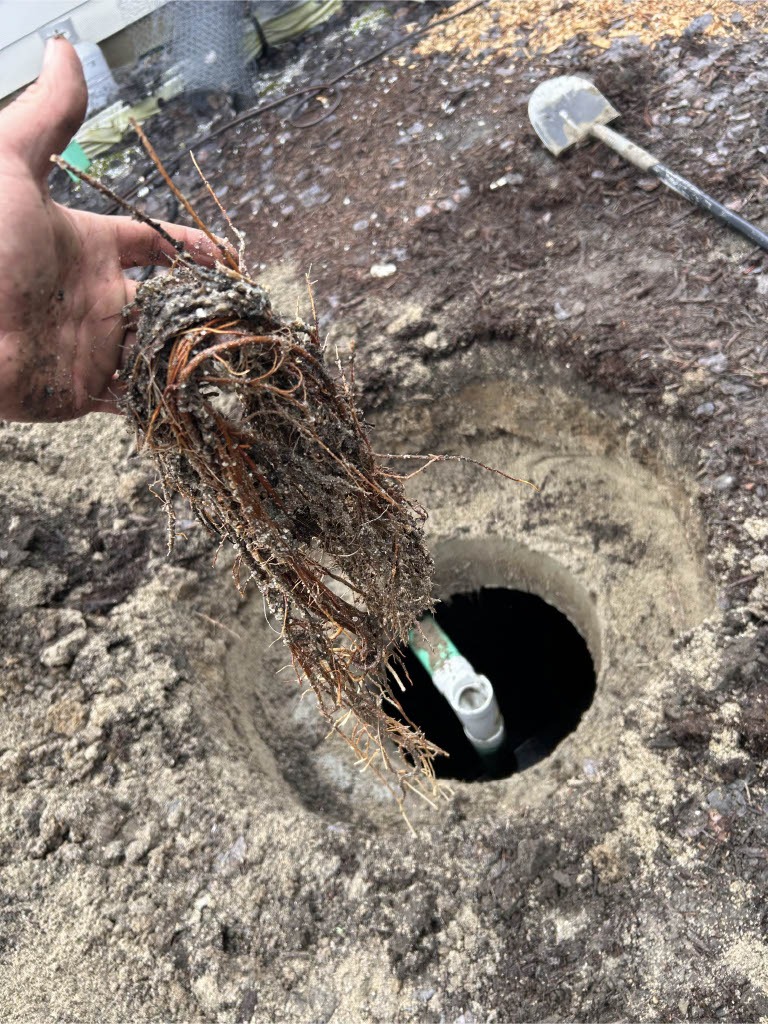
Roots go where the water is, and in the desert that is often the sewer line itself. Mesquite, palo verde, ficus, ash, and oleander all send roots well past their canopy, and a hairline gap at a pipe joint is enough of an opening. Established neighborhoods with mature landscaping see this far more than newer builds.
Much of Old Town and South Scottsdale was built between the late 1940s and the 1960s, and plenty of those homes still run on original pipe. Clay tile, cast iron, and Orangeburg were all standard then. Orangeburg was used across the Valley until 1972 and has a service life of 30 to 50 years, so anything still in the ground is past it.
A standard home inspection stops at the fixtures and does not include the sewer line. In a market with Scottsdale’s turnover, a sewer scope is often the difference between a known repair and a surprise the next owner inherits.
Any one of these on its own may not amount to much. Two or three together usually means the line deserves a look before the next backup picks the timing. The camera settles what is actually down there, whether that is scale narrowing the pipe, a belly holding water, an object lodged at a joint, or nothing at all. A line that checks out clean is a legitimate result, and a common one.
An inspection is only worth what the explanation is worth. A&N Plumbing is family-owned, and the same person who runs the camera is the one who walks through the footage afterward, in plain language, without a script. You see the pipe when we see it.
Every inspection ends with a written estimate before any work is scheduled, so the cost of the next step is known before there is a decision to make. Sometimes that next step is a repair. Sometimes it is monitoring the line and checking it again in a couple of years. A licensed technician telling you the pipe is fine is a legitimate outcome, and it happens often enough that it is worth saying out loud.

What the camera finds tends to track with when a neighborhood went in. The oldest housing stock sits in the 85251 and 85257 corridors, where postwar homes from the 1950s and 1960s often still run the clay tile and cast iron they were built with. The master-planned communities that followed, McCormick Ranch, Gainey Ranch, and Scottsdale Ranch, are now hitting the age where joints separate and low spots start holding water. Newer construction in DC Ranch, Silverleaf, Grayhawk, and McDowell Mountain Ranch runs modern pipe, so problems there look different: settling, debris left behind during the build, or buildup in a home that has been on the same fixtures for twenty years.
Sewer camera inspection is one of the plumbing services A&N Plumbing provides across Scottsdale, and the team also works in nearby communities including Paradise Valley, Fountain Hills, Cave Creek, Carefree, Tempe, and Mesa. Pipe age, soil, and line material shift from one street to the next, which is the whole reason an inspection starts by looking rather than assuming.
Cost depends on the length of the line and how easy the cleanout is to reach. Most Phoenix-area plumbers publish standalone inspection rates between $250 and $550, and many waive the fee when the inspection is paired with drain service. A&N Plumbing provides a written estimate before any work is scheduled.
Most residential inspections take about 30 to 60 minutes. A short line with an accessible cleanout goes faster. Longer runs, or a property where the cleanout is buried or hard to reach, take more time. Walking through the footage with the homeowner is part of the visit, not an extra step.
Yes. A camera inspection clearly shows where roots have entered a sewer line, how far they’ve spread, and whether they’ve caused any cracking or separation at the joints. This helps determine whether hydro jetting, repair, trenchless pipe lining, or another approach is the right next step.
A camera can still get into the line, though access takes longer. Without a cleanout, the usual entry point is a pulled toilet or a roof vent, depending on the layout. Homes built before the 1970s often have no exterior cleanout, and adding one is worth considering if the line needs regular attention.
Sometimes, but standing water blocks the camera’s view. When a line is fully backed up, clearing the blockage usually has to happen first, then the camera goes in to find out why it happened. Running the inspection after the line drains is what shows whether the cause is still sitting there.
Yours. The City of Scottsdale holds property owners responsible for the sewer lateral, meaning all the piping running from the city main to the house. A break anywhere along that stretch falls to the homeowner, which is why knowing its condition ahead of time matters.
A recurring drain problem rarely sorts itself out, and the guessing around it is what gets expensive. An inspection replaces the guess with footage, and the footage tells you whether the line needs work now, needs watching, or is fine as it is.
A&N Plumbing works throughout Scottsdale and the surrounding communities. Reach out to our team of experts to get on the schedule, or call and describe what the drain has been doing. That conversation is usually enough to sort out which inspection fits.