
TL;DR
When: Chelan typically sees its first freezing nights in mid-to-late October, and the Lake Chelan Reclamation District shuts off irrigation water on October 15. October is the window to close a lake house.
Which method: Leaving the heat on helps, but a winter power outage can stop the furnace, heat tape, and tankless freeze protection at the same time. For a home that sits empty for weeks, shutting off the water and draining the system is the more dependable option.
What it covers: Shutting off the water at a customer-side valve, draining the lines and water heater, protecting drain traps and toilets, blowing out irrigation, and insulating the meter box. The City of Chelan and LCRD both make that last step the owner’s responsibility.
Before you leave: Washington’s Insurance Commissioner notes that burst-pipe coverage can depend on whether the home was kept heated, so review your policy’s vacancy terms.
The last weekend at the lake tends to follow a familiar routine. The boat comes out of the water, the patio furniture goes into storage, and the house gets locked up until spring. What is easy to overlook on the way out is the water still sitting in the pipes, the water heater, and the lines running through the crawlspace.
At a full-time home, a frozen pipe is usually noticed within hours. At a second home near Lake Chelan, a cracked line can leak for days or weeks before a neighbor, a property manager, or the water district spots the problem. That gap is why the way you winterize vacation home plumbing matters more than the cold-weather habits you might use at a primary residence, and why the work is best done on a calm October afternoon rather than the night before a cold front.
This guide covers the full plumbing checklist for closing a lake house in Chelan or Manson: when to schedule it, how to choose between draining the system and leaving the heat on, how to handle tank and tankless water heaters, and what to check when the house opens again in spring. A&N Plumbing handles seasonal closings for second-home owners around Chelan, and the same steps apply whether you work through the list yourself or have a plumber take care of it.
Why Lake Chelan Second Homes Need a Plan Before the First Freeze
Lake Chelan’s long, mild fall makes it easy to put off closing the house. Early October afternoons are often still comfortable, and the lake holds onto its summer warmth well into the season. The nights are a different story. According to the Western Regional Climate Center, the first fall freeze in Washington’s warmer fruit-growing valleys usually arrives by the middle of October, and Chelan typically sees freezing nights in the second half of the month.
Those first light frosts rarely damage plumbing on their own. The bigger concern is what comes later in the winter. Chelan County’s building standards use a winter design temperature of 5°F, which means homes in the area are built expecting single-digit nights. Some winters go further. Local growers reported sub-zero temperatures in the Chelan valley in both December 2022 and January 2024, and vineyards farther from the water tended to see more damage. Homes often follow the same pattern: a house on a hillside or bench above the lake can run noticeably colder than a lakefront lot a short drive away.
An empty house changes how much a small problem can grow. In a full-time home, someone hears the drip or notices the water stain soon after a pipe splits. In a second home, the same crack can go unnoticed until the next visit. State Farm notes that a small crack in a pipe can release more than 250 gallons of water a day, and in a vacant home that water can collect in floors, walls, and the crawlspace before anyone knows it is there.
That is why winterizing tends to work best as a scheduled task rather than a reaction to the forecast. Owners in the Manson area already have a built-in reminder: the Lake Chelan Reclamation District shuts off irrigation water around October 15 each year, which makes mid-October a natural time to close out the rest of the plumbing system as well. Booking the closing visit in October leaves room to work through each step, repair anything that turns up, and leave the house ready for the cold.
Drain It or Heat It? Two Ways to Winterize Vacation Home Plumbing
There are two basic ways to winterize vacation home plumbing: keep the heat and water on, or shut the water off and drain the system. The right choice depends mostly on how often the house will be used over the winter.
Leaving the heat on is simpler and keeps the house ready for a winter visit. Washington’s Insurance Commissioner recommends keeping a home above 60°F in cold weather. The catch is that this approach depends on steady power. A single outage can stop the furnace, heat tape, and a tankless water heater’s freeze protection at the same time.
Draining the system removes the water that freezing temperatures need to cause damage. With the main shut off and the lines and water heater drained, very little is left to split, even if the power goes out. The trade-off is no running water until the house is reopened.
Here is how the most common approaches compare:
| Approach | Best Fit | Main Limitation |
|---|---|---|
| Heat on, water on | Homes visited every few weeks | Depends on steady power and fuel |
| Full drain-down | Homes empty most of the winter | No running water until reopened |
| Drain-down with heat on | Homes empty for long stretches | Heat still needs power, but the plumbing stays protected |
For most owners who close up in October and return in spring, draining the system and keeping the heat on is the most dependable setup. The plumbing holds up if the power fails, and the heat protects drywall and furnishings through the coldest stretches.
If the house has a residential fire sprinkler system, its water supply needs to stay on, so check with the installer before shutting off the main.
The Plumbing Checklist for Closing a Lake Chelan Second Home
A thorough closing follows the same order every time, starting at the main shutoff and working outward through the house. Working out of order, such as draining fixtures before the water is fully off, is how water ends up trapped in lines that look empty.
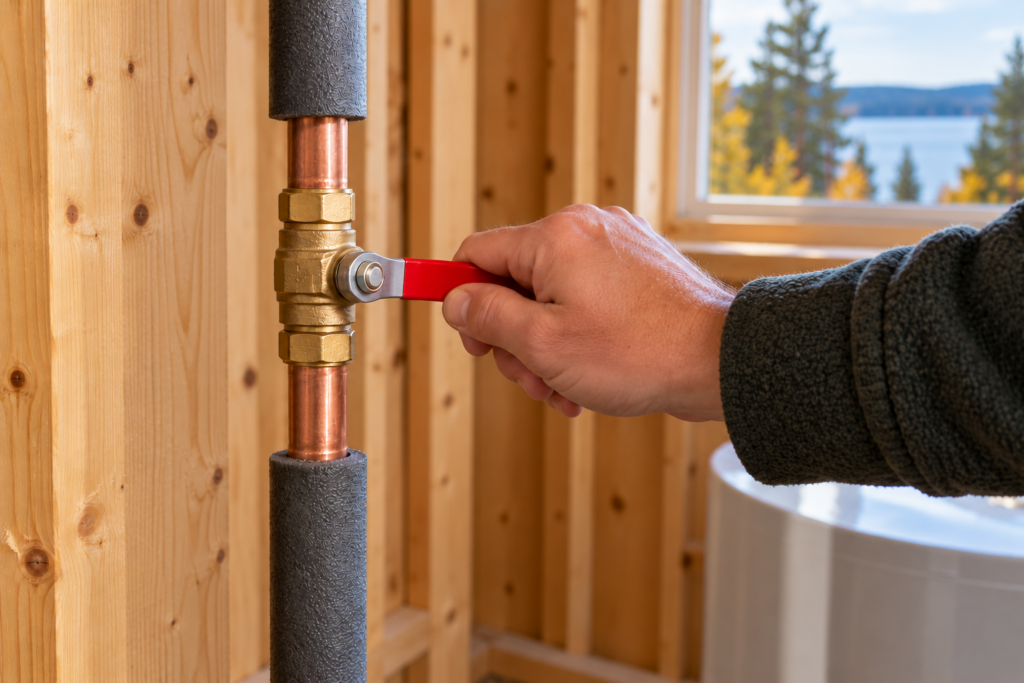
- Shut off the water at your own valve. In the Manson area, the Lake Chelan Reclamation District does not allow customers inside the meter box, and it recommends a customer-owned shutoff valve just past the meter. If the house does not have an easy-to-reach shutoff, having one installed makes every future closing simpler.
- Drain the supply lines. Open every faucet, hot and cold, starting at the highest fixture in the house and finishing at the lowest. Then flush each toilet and open the shower and tub valves to clear what remains.
- Drain the water heater. Turn off the gas or the breaker before draining a tank. Tankless units have their own steps, covered below.
- Protect drain traps and toilets. The water sitting in sink traps and toilet bowls can freeze and crack fittings or porcelain. A common practice is adding non-toxic plumbing antifreeze (the pink, propylene glycol type sold for RVs) to each trap and bowl. Automotive antifreeze should never go into household drains.
- Clear outdoor faucets and irrigation. Disconnect hoses, drain the hose bibs, and blow out sprinkler and drip lines. LCRD customers can plan this step around the mid-October irrigation shutoff.
- Drain filtration and softener equipment. Filter housings and softener tanks hold water that can freeze and crack. Each unit’s manufacturer instructions list the right way to drain or bypass it, and a water filtration system that was professionally installed can usually be winterized during the same visit.
- Insulate the meter and backflow box. The City of Chelan and LCRD both make this the owner’s responsibility. LCRD suggests sealing the insulation in a garbage bag so it stays dry.
- Check crawlspaces and exterior walls. Pipes in these spaces can freeze even when the thermostat inside reads normal. Insulate exposed lines and close off vents or gaps that let cold air reach them.
Once the last step is done, set the thermostat to a steady temperature that meets your insurance policy’s requirements. It also helps to leave a short note by the main shutoff listing what was drained and when. That record makes the spring opening faster, and it tells a property manager or plumber exactly where things stand.
City Water, LCRD, Wells, and Lake-Draw Systems: What Changes by Water Source
The checklist above applies to almost every lake home, but where the water comes from changes a few of the steps. Most second homes around Chelan and Manson fall into one of four setups.
City of Chelan Water
The City of Chelan’s responsibility ends at the meter, and its utility guide makes protecting the meter from freezing the customer’s job. If you would like service turned off at the meter for the season, contact the city’s utility office ahead of your closing date to ask how the process works.
Lake Chelan Reclamation District (Manson Area)
Many homes in the Manson area have two separate LCRD connections, one for domestic water and one for irrigation. The district shuts down irrigation water in mid-October, but the plumbing after the irrigation turnout belongs to the owner and still needs to be drained or blown out. Some parts of the district also run at higher water pressure, so homes there need a pressure-reducing valve. A closing visit is a good time to confirm it is working properly.
Private Wells
A well system adds a pump and a pressure tank to the list. The pump’s breaker is turned off first, then the pressure tank and lines are drained. Pump and tank designs vary, so the manufacturer’s instructions are the best guide for the details. If the well pump or pressure tank sits in an unheated space, it deserves the same insulation check as a crawlspace.
Lake-Draw Systems
Some lakefront properties pull water directly from Lake Chelan for irrigation or other uses. These systems typically need the pump powered off, the pump housing drained, and any lines above the waterline drained or blown out, since a pump casing left full of water can crack in a hard freeze. Setups vary widely from one property to the next, so a plumber’s review before the first winter is often worthwhile.
Homes on septic have their own winter considerations, which are best handled with the septic provider before the house closes.
Tank and Tankless Water Heaters in an Empty House
The water heater holds more water than any other part of the plumbing system, which makes it one of the most important pieces to handle correctly during a closing.
Tank Water Heaters
A standard tank is drained after the water supply is shut off, but the order of the next steps matters. On a gas unit, the gas valve is turned to off or to the vacation setting listed in the owner’s manual. On an electric unit, the breaker is switched off before any water drains, because heating elements that run in an empty tank can burn out quickly. From there, a hose goes on the drain valve, a nearby hot water faucet is opened to let air in, and the tank empties to a floor drain or outside.
Draining the tank also flushes out built-up sediment, so it is a good moment to look at the heater’s overall condition. Rust at the base, a dripping relief valve, or a tank near the end of its service life are all easier to plan around in October than to discover when the house opens in spring. Anything that turns up during the closing can be handled through A&N’s water heater repair and replacement service.
Tankless Water Heaters
Tankless units are often thought of as freeze-proof, but that protection has limits. Manufacturers such as Rinnai build in freeze protection that only works while the unit has both power and gas, and it does not cover the water lines running to and from the heater. In a vacant home, a single winter power outage can leave a tankless unit unprotected.
For a closed lake house, the more dependable approach is to drain the unit through its isolation valves (the service valves installed just below the heater), following the manufacturer’s steps. For homes where the water stays on through winter, an automatic drain-down kit is worth considering, since it empties the unit on its own if the power goes out.
Opening the House in Spring: What to Check First
Reopening a winterized lake house is mostly the closing checklist in reverse, but a few steps need to happen in a specific order. In the Manson area, LCRD irrigation water returns on April 1, which gives many owners a natural starting point for the season.
Begin by closing every faucet and drain valve that was left open in the fall. Refill the water heater completely before turning the gas or breaker back on, since an electric tank that heats while empty can damage its elements. Then open the main shutoff slowly. Running each faucet until the sputtering stops clears trapped air from the lines, and a few flushes clear the plumbing antifreeze from toilets and drain traps.
Once the system is full and holding pressure, take a few minutes to look for signs of freeze damage:
- Water stains on ceilings, walls, or the bottoms of cabinets
- Damp insulation or standing water in the crawlspace
- A water meter that keeps moving with every fixture turned off
- Low pressure, or no water at all, at a single fixture
Any of these can point to a split line or cracked fitting hidden behind a wall or under the floor. Shutting the water off again and scheduling a professional plumbing repair helps prevent further damage while the source is tracked down.
The first busy weekend of the season also puts the drains back to work. If the drains in an older lake house run slowly or back up once the house is in use, aging drain lines may be the underlying cause. In many cases, pipe lining can restore a damaged line without digging up the yard, patio, or landscaping.
Lake Chelan Vacation Home Winterizing FAQs
Does homeowners insurance cover frozen pipes in a vacation home?
Often, yes, as long as reasonable steps were taken to protect the home, such as keeping it heated or shutting off and draining the water. Second homes can carry vacancy or unoccupancy terms that add conditions, and Washington’s Insurance Commissioner has warned that some policies include water damage sublimits. Reviewing the policy with your agent before closing the house is the simplest way to know where you stand.
Can I keep an eye on my lake house plumbing while I’m away?
Yes. A smart thermostat can send an alert if the indoor temperature drops, and water sensors placed near the water heater and under sinks can flag a leak early. An automatic shutoff valve on the main line goes a step further by stopping the water on its own. These tools work best alongside a proper winterization, not in place of one.
Can I winterize a vacation home myself?
Many owners handle the basic steps themselves, such as shutting off the water, draining fixtures, and clearing hose bibs. The steps that tend to cause trouble are the ones that are easy to get only partly right: fully blowing out the lines, draining a tankless heater, and winterizing a well or lake-draw pump. A professional closing visit covers those details and leaves a record of what was done.
What should I do if my pipes freeze before I winterize?
If a faucet runs slowly or not at all during a cold snap, a line may already be frozen. Leave that faucet open, shut off the main if a pipe has split, and never use an open flame to thaw a pipe. A plumber can locate the frozen section, thaw it safely, and check for cracks before the water goes back on.
Closing Up the Lake House With Confidence
A second home near Lake Chelan spends most of the winter on its own, so its plumbing needs to be ready before the first cold stretch rather than after it. Choosing between draining the system and keeping the heat on, working through each step in order, and planning ahead for the water heater and water source covers the most common causes of frozen pipes in a vacant house.
A&N Plumbing schedules seasonal closings for second homes around Chelan and Manson each fall, along with spring visits to reopen the house and confirm everything is holding pressure. To set up a winterizing visit before freezing nights arrive, contact our team or call (509) 888-1933.