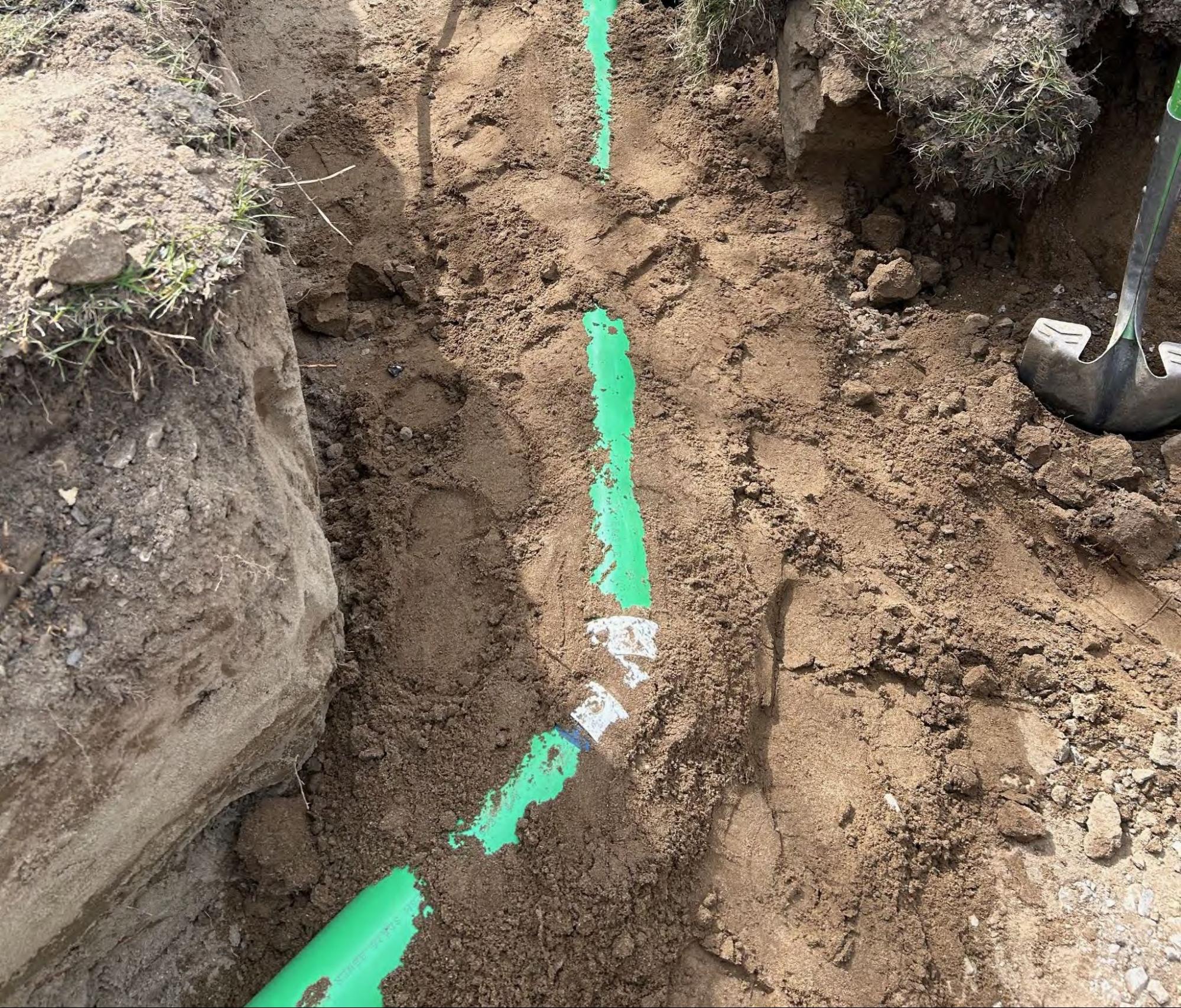


Water line repair fixes the buried pipe that carries clean water from the meter into your home. Most homeowners in North Central Washington do not notice a problem until something small gets their attention: a soggy patch of lawn during a dry August, water pressure that drops in every faucet at once, or a water bill that climbs with no change in how much water you used. Those are the early signs, and waiting on them is what turns a spot repair into a full line replacement.
A leaking water line does not automatically need to be replaced. Whether a repair or a replacement makes more sense comes down to the pipe material, the age of the line, and how many places along it have failed. A&N Plumbing locates the leak before any digging starts, shows you what we found, and lays out your options with a price attached to each one. You decide from there.
Our diagnostic pinpoints where the leak is and what’s causing it before anyone picks up a shovel. The fee is waived if you have us do the repair.
A failing water line almost always warns you before it breaks. The signs are easy to miss because they build slowly, and most of them look like something else at first. If you notice any of the following, have the line checked before the problem forces the decision for you.
A single slow faucet usually points to a clogged aerator or a bad cartridge. When pressure falls off at every fixture in the house, the problem is upstream, and a leak in the main line is one of the most common causes. Water escaping underground never reaches your taps.
Look for ground that stays wet when the rest of the yard is dry, unusually green patches, or a low spot that seems to be sinking. Buried lines run several feet down, so water from a leak often surfaces well away from the actual break. That is why guessing where to dig rarely works.
A steady month-over-month increase with no change in household use is one of the clearest signals of an underground leak. A crack the width of a pencil lead can waste thousands of gallons before anyone notices. Compare a few recent bills side by side, and if the line keeps rising, get the line inspected.
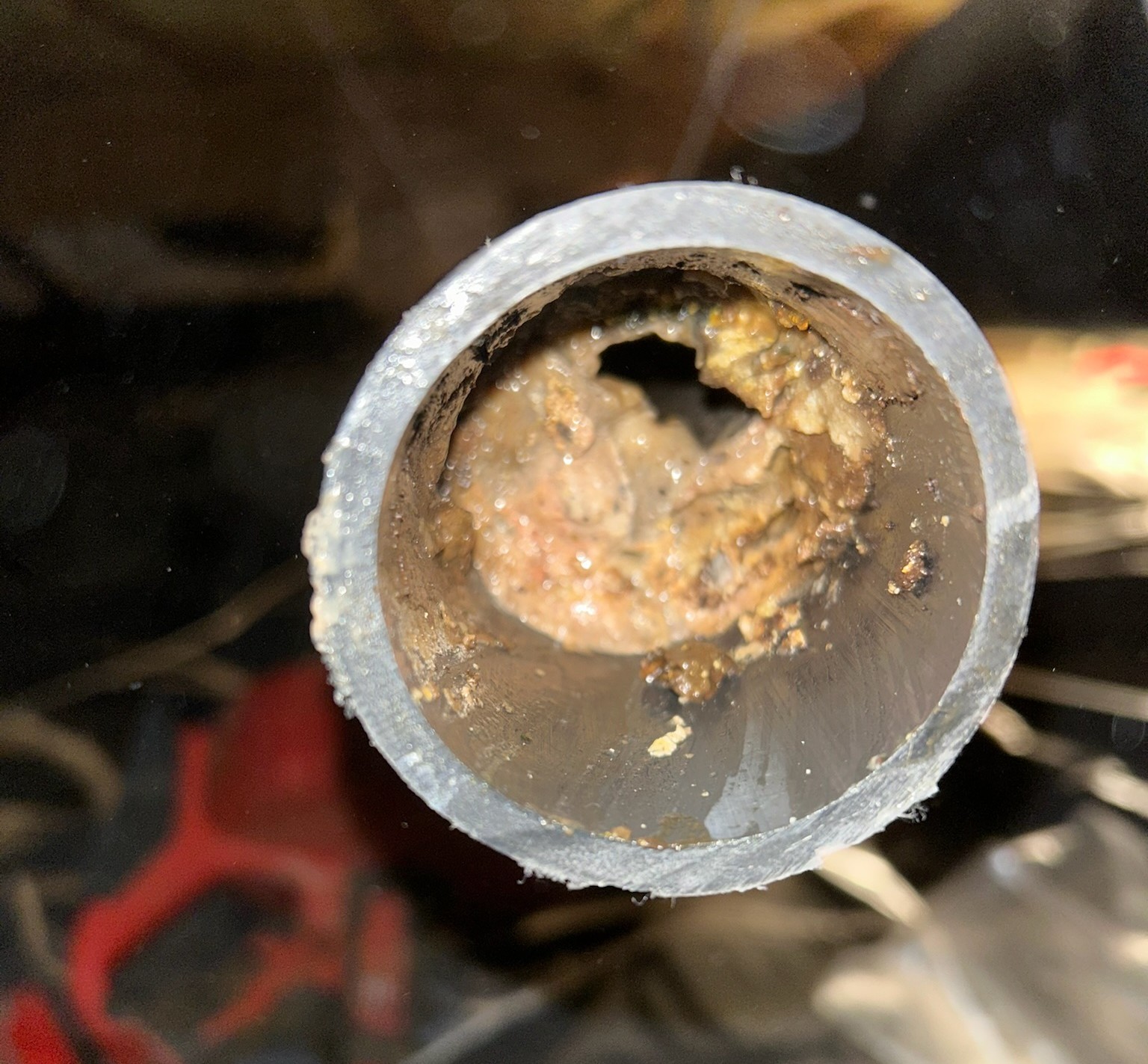
Rust-colored, brown, or murky water can mean the inside of your supply line is corroding, which is common in older galvanized steel pipe. It can also mean a crack is letting soil and sediment into the line. Either way it is worth having looked at, since a pipe that is shedding material is a pipe that is thinning.
Hissing, gurgling, or the sound of running water when every fixture is off usually means water is moving somewhere it should not be. On a slab foundation, a warm spot on the floor points to a leak on the hot water side. These are not sounds a healthy plumbing system makes.
One leak is a repair. A third leak in two years on the same run of pipe is the line telling you the material has reached the end of its service life. At that point, patching costs more over time than replacing the section.
You do not need to diagnose this yourself. A camera inspection and pressure testing tell us which of these is actually happening and exactly where, so the repair goes to the right spot the first time.
We handle the water supply side of your plumbing, from the meter at the street to the pipes running behind your walls. Some of this work is planned, like replacing a line that has been patched one too many times. Some of it happens at six in the morning in January. Either way, the job starts the same way: we find the problem before we quote the fix.
That covers the clean water coming in. If the problem is on the wastewater side going out, that is a different repair and a different page: trenchless pipe lining handles damaged sewer lines without excavation, and septic services covers tanks and drain fields. Not sure which side of the house your problem is on? That is what the diagnostic is for.
Most water line problems could go either way, and the answer depends on the pipe material, how old the line is, and how many spots have already failed. A&N Plumbing sorts that out on site and gives you both numbers, so the decision is yours to make with real information behind it.
A spot repair fixes one failure. A replacement fixes the line. The right choice comes down to three things: what the pipe is made of, how old it is, and whether this is the first problem or the latest in a pattern.
If the line is otherwise in good shape and one section failed for a specific reason, repair it. That covers a pipe cracked by shifting soil or freezing, a joint that worked loose, a section nicked during landscaping or fence work, and any newer line that failed from outside damage rather than age. A single repair on a sound line will hold for years, and there is no reason to spend replacement money to get there.
If the pipe itself is failing, patching one spot only moves the problem down the line. Replace when the line is galvanized steel and corroding from the inside, when you have had two or more leaks in a few years, when pressure stays low after a repair because scale has narrowed the pipe, or when the line is polybutylene, which was installed in many homes between the late 1970s and mid-1990s and has a known failure history. In each of these cases the next leak is a matter of when, not if.
How long water line materials actually last:
Pipe Material | Typical Lifespan | Common in Homes Built |
Galvanized steel | 40 to 50 years, with flow loss well before that | Through the 1960s |
Polybutylene | Frequently fails early | Late 1970s to mid 1990s |
Copper | 50 to 70 years | 1960s onward |
PEX | 40 to 50 years | 1990s to present |
HDPE | 50 or more years | 2000s to present |
Older homes across North Central Washington are the ones most likely to still be running on galvanized steel, and it is the material we replace most often. If your home predates the 1970s and has never had the supply line touched, there is a reasonable chance the pipe underground looks like the photo above.
We will tell you which situation you are in and what each path costs before you decide. If a repair will hold, we will say so.
No two water line jobs price the same, because almost all of the cost is in reaching the pipe rather than the pipe itself. A few hundred feet of PEX is inexpensive. Getting to it is not. These are the factors that move the number up or down.
Cost scales with length. A home sitting close to the street needs a shorter run than one set back behind a long driveway, and pricing for line work is generally figured by the foot.
Depth drives excavation time, and what sits above the line matters just as much. Open lawn is the easy version. A line running under a driveway, sidewalk, patio, mature landscaping, or a concrete slab adds both the work of getting through it and the work of putting it back.
Trenching costs less per foot but leaves you with a yard to restore. Trenchless methods cost more up front and leave the surface largely intact, which often makes them the better total value when the line runs under hardscaping. We price both when both are options.
A single spot repair on an accessible line is one of the least expensive jobs in this category. A full replacement is one of the larger plumbing investments a homeowner makes. This is why the diagnostic matters, since it tells you which conversation you are actually having.
Rocky ground, high water table, and frozen or saturated soil all slow excavation. Material choice affects cost as well, though it is usually a smaller factor than access.
Most municipalities require a permit to replace a water service line, along with a pressure test and inspection before the trench gets backfilled. We handle the permitting and build it into the quote rather than adding it later.
A line that fails at two in the morning gets priced differently than one scheduled for next Tuesday. If the situation allows for scheduling, scheduling costs less.
Getting your actual number: We do not quote water line work over the phone, because any number given before we know where the leak is and what it takes to reach it would be a guess. The $49 diagnostic locates the problem and produces a written price. If you move forward with the repair, the diagnostic fee is waived.
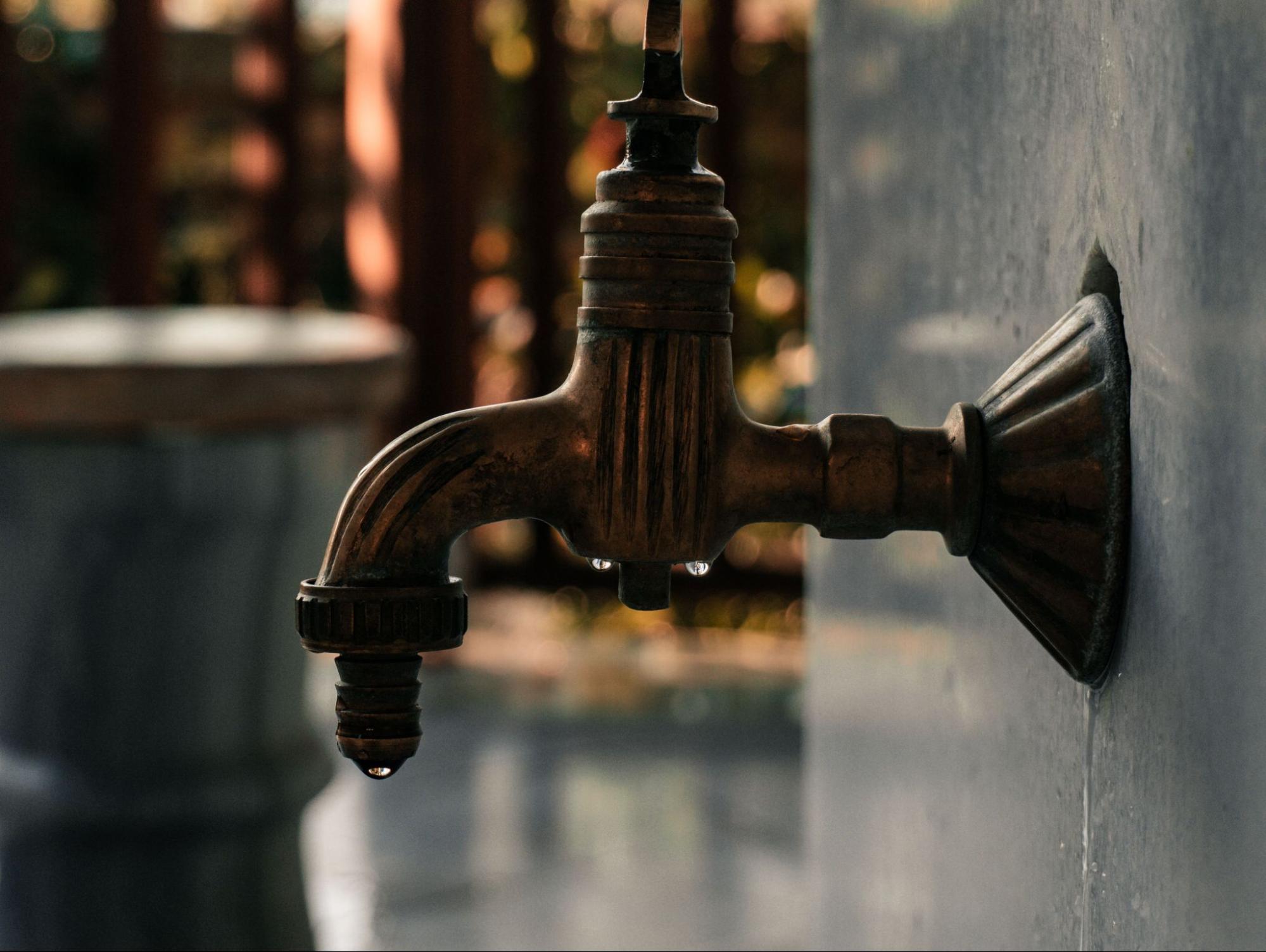
The $49 diagnostic pinpoints the leak and gives you a written price on the fix. The fee comes off the bill if you have us do the work.
No two water line jobs price the same, because almost all of the cost is in reaching the pipe rather than the pipe itself. A few hundred feet of PEX is inexpensive. Getting to it is not. These are the factors that move the number up or down.
Cost scales with length. A home sitting close to the street needs a shorter run than one set back behind a long driveway, and pricing for line work is generally figured by the foot.
Depth drives excavation time, and what sits above the line matters just as much. Open lawn is the easy version. A line running under a driveway, sidewalk, patio, mature landscaping, or a concrete slab adds both the work of getting through it and the work of putting it back.
Trenching costs less per foot but leaves you with a yard to restore. Trenchless methods cost more up front and leave the surface largely intact, which often makes them the better total value when the line runs under hardscaping. We price both when both are options.
A single spot repair on an accessible line is one of the least expensive jobs in this category. A full replacement is one of the larger plumbing investments a homeowner makes. This is why the diagnostic matters, since it tells you which conversation you are actually having.
Rocky ground, high water table, and frozen or saturated soil all slow excavation. Material choice affects cost as well, though it is usually a smaller factor than access.
Most municipalities require a permit to replace a water service line, along with a pressure test and inspection before the trench gets backfilled. We handle the permitting and build it into the quote rather than adding it later.
A line that fails at two in the morning gets priced differently than one scheduled for next Tuesday. If the situation allows for scheduling, scheduling costs less.
Getting your actual number: We do not quote water line work over the phone, because any number given before we know where the leak is and what it takes to reach it would be a guess. The $49 diagnostic locates the problem and produces a written price. If you move forward with the repair, the diagnostic fee is waived.
A&N Plumbing has served North Central Washington since 2015. We are family-run, which means the person who answers the phone and the person who shows up both work for the same family, and the work gets done the way we would want it done at our own houses.
Water line work is disruptive and expensive enough that you deserve to know exactly what you are paying for before anyone starts digging. That is how we run every one of these jobs.
A&N Plumbing works throughout the Wenatchee Valley and the surrounding communities, including Wenatchee, East Wenatchee, Sunnyslope, Cashmere, Malaga, Rock Island, Orondo, Entiat, Chelan, Manson, Leavenworth, and Waterville.
Water lines in this part of the state contend with things that lines in milder climates do not. Winter freezes reach buried and exposed supply lines, spring thaw shifts soil around pipe that has been in the ground for decades, and rocky ground through much of the valley makes excavation slower and access harder to reach. Homes in the older neighborhoods around central Wenatchee and along the Western Avenue corridor are the most likely to still be running on original galvanized supply lines.
If you are not sure whether you are inside our service area, call and ask. We will tell you straight either way.
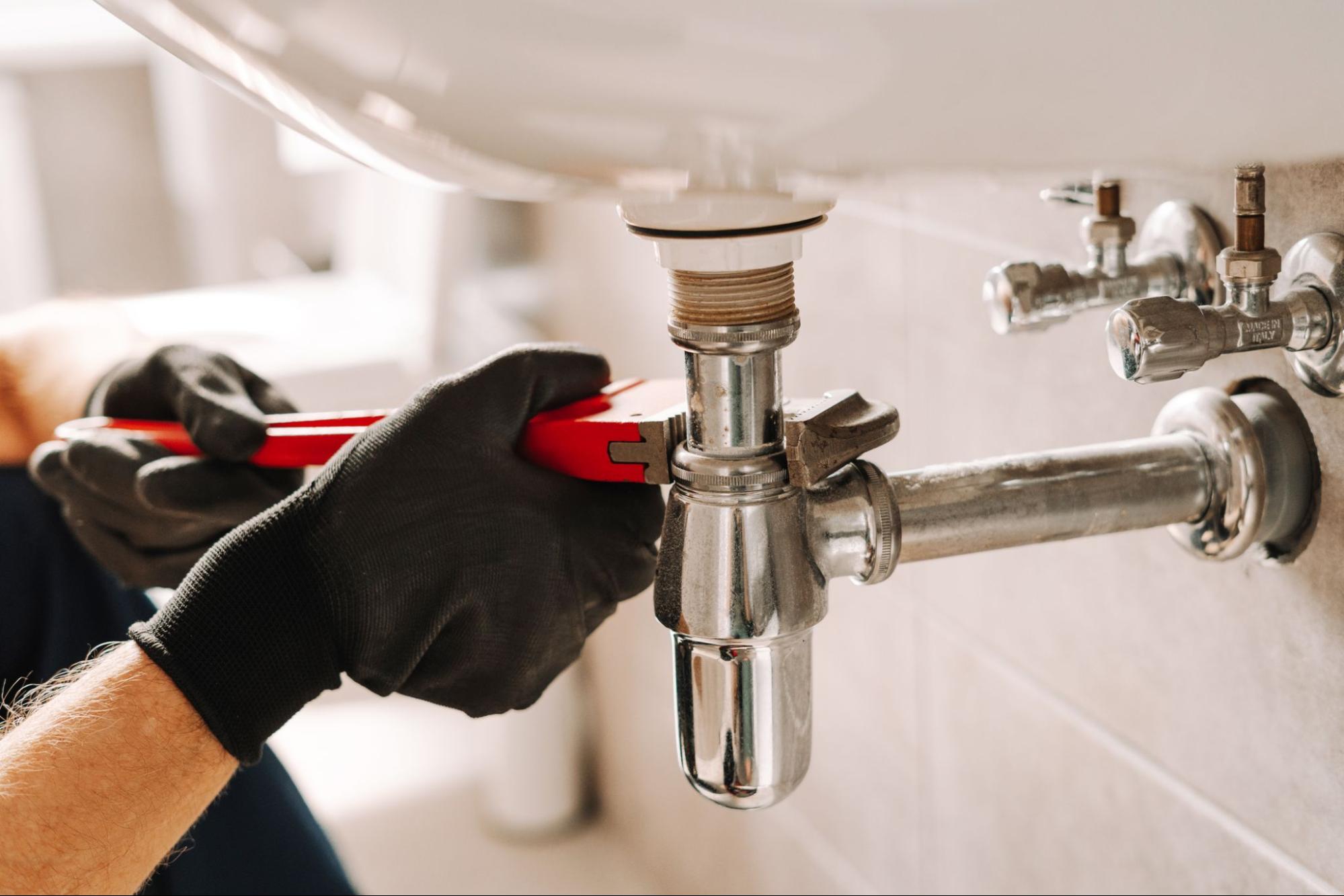
A leak underground does not fix itself, and the longer it runs the more it costs to repair. A&N Plumbing will find the problem, show you what we found, and give you a written price before any work starts. All you need to do is reach out today!

What you get from A & N Plumbing & More:
Diagnostic fee waived if we do the repair.
Disclaimer: *Some restrictions or conditions may apply, call for details. Offer may be subject to credit approval. Must present offer at time of service. Not available to combine with other offers/promotions.
What you get from A & N Plumbing & More:
Diagnostic fee waived if we do the work.
Disclaimer: *Some restrictions or conditions may apply, call for details. Offer may be subject to credit approval. Must present offer at time of service. Not available to combine with other offers/promotions.
In most cases the homeowner owns and maintains the water service line from the meter to the home, while the utility is responsible for the main in the street and typically the meter itself. That means a leak on your side of the meter is your repair to make. Responsibility can vary by jurisdiction, so it is worth confirming with your local water utility before work begins.
Standard homeowners policies generally do not cover the water service line itself, because underground pipe failure is treated as gradual wear rather than a sudden accident. Some policies do cover resulting damage, like a flooded crawl space or ruined flooring, and some utilities offer optional service line coverage for a small monthly fee. Check your declarations page or call your agent before assuming either way.
Often, yes. If the line is otherwise sound and one section failed from freezing, shifting soil, or outside damage, a spot repair is usually the right answer and costs considerably less. Replacement makes more sense when the pipe material itself is failing, which is common with galvanized steel and polybutylene. We tell you which situation you are in before you decide.
A straightforward spot repair on an accessible line is frequently a same-day job. A full service line replacement generally takes one to three days depending on length, depth, and what sits above the line, plus time for the permit inspection before the trench is backfilled. We give you a realistic timeline with the quote.
Most municipalities require a permit for replacing a water service line, along with a pressure test and an inspection before backfilling. Smaller repairs sometimes do not. A&N handles the permitting and schedules the inspection as part of the job, so you are not the one making calls to the city.
Find your main shutoff valve before you need it. It is usually inside the house near where the line enters, often in a basement, crawl space, or utility area, and there is a second valve at the meter. Turn it clockwise to close. If you cannot find it or it will not budge, call us and we will walk you through it on the phone.