
TL;DR
- Cured-in-place pipe liners are built to a 50-year design standard, and most lined sewer pipes last 20 to 50 years or more in real homes.
- That spread is not marketing hedging. Lifespan depends on the condition of the pipe being lined, how thoroughly it was cleaned first, and how carefully the liner was installed and cured.
- A sewer camera inspection is what tells you whether your line is a good candidate for lining and what lifespan is realistic for your specific pipe.
Getting a quote for trenchless sewer repair usually comes with a promise attached: the new liner will last for decades. That is a fair thing to question. You are paying for a repair you will never see, inside a pipe buried under your yard, and the lifespan you were quoted is only as good as the work behind it. Some liners hold up for the full life of the home. Others fall short, and the reasons why are usually decided long before the resin ever cures.
What follows is the practical version, not the spec sheet. Here is what actually determines a pipe liner’s lifespan, what shortens it, and how to tell whether your line is a good candidate in the first place.
See What Shape Your Sewer Line Is In
How Long Does Trenchless Sewer Repair Last?
A properly installed sewer pipe liner typically lasts 20 to 50 years or more. Cured-in-place pipe (CIPP) products are engineered and tested to a 50-year design life, which is the standard the industry builds around.
Design life is not the same as a guarantee. It assumes the liner went into a pipe that was a good candidate, was cleaned thoroughly first, and was cured the way the manufacturer intended. Meet those conditions and a lined pipe can outlast the plumbing it was installed to save. Miss them, and the number drops.
What Determines How Long a Pipe Liner Lasts
The 20 to 50 year range is wide for a reason. Four things account for most of the difference.
The Condition of the Pipe Being Lined
A liner reinforces the pipe it goes into, so the starting condition matters. A line with hairline cracks and some scale is a strong candidate. A line that has collapsed, sagged, or shifted badly out of alignment is not, and lining it would only postpone a full sewer line repair or replacement. This comes up often in older Wenatchee homes, where clay pipe and decades of freeze and thaw cycles have loosened joints and pulled sections apart.
How Thoroughly the Pipe Was Cleaned First
Resin bonds to a clean surface. Grease, mineral scale, and root debris left inside the line create weak spots where the liner never fully adheres. That is why hydro jetting and descaling come before lining, not as an upsell but as the step that determines whether the liner holds.
Installation and Curing
The liner has to be saturated evenly, positioned correctly, and cured completely. Rushed curing, uneven resin, or a wrinkled liner all shorten the repair’s life, and none of it is visible from above ground once the job is done. The crew doing the work has more influence on lifespan than the product itself.
The Lining Method Used
Not every no-dig repair is the same. A full structural CIPP liner forms a new pipe inside the old one and carries the longest expected life. Thinner epoxy coatings seal and smooth a pipe interior but add far less structural strength, and they are not built to last as long. Both have their place, so it is worth asking which method is being quoted and why.
Put simply, trenchless sewer repair lasts as long as the work behind it allows, which is why the inspection and prep matter as much as the liner itself.
Trenchless Repair vs. Traditional Dig and Replace
Both methods fix a failing sewer line. They differ in what it takes to get there.
| Trenchless Pipe Lining | Traditional Dig and Replace | |
|---|---|---|
| What is involved | A resin liner is inserted through existing access points and cured in place inside the old pipe | The line is excavated, the old pipe is removed, and new pipe is laid in the trench |
| Time on site | Usually wraps up in a day or two | Often several days, sometimes longer on a long run |
| Property disruption | Minimal digging, landscaping and hardscape stay in place | Open trench across the yard, driveway, or slab |
| Restoration afterward | Little to none | Concrete, sod, and landscaping often need to be rebuilt |
| Expected lifespan | 20 to 50 years or more | Comparable, depending on the pipe material installed |
| Best fit | Pipes that are cracked, scaled, or leaking but still hold their shape | Pipes that have collapsed, sagged, or shifted out of alignment |
Lining is not automatically the better choice. When a pipe has lost its shape, there is nothing sound left to line against, and a full sewer line repair or replacement is the repair that actually holds.
Cost tends to be the deciding factor for most homeowners, and it moves with the length of the line, its condition, how much cleaning it needs beforehand, and what has to be rebuilt afterward. That last piece is where trenchless sewer repair often pulls ahead, since the concrete and landscaping restoration that follows excavation is real money that does not show up in a per-foot comparison. The only way to know which method your line needs is to see inside it first, so reach out for an estimate once you know what you are dealing with.
What Shortens a Liner’s Life, and How to Protect It
A cured liner is durable, but it is not immune to what runs through it. A handful of habits account for most early wear:
- Chemical drain cleaners
- Grease and cooking oil poured down the drain
- Wipes, paper towels, and other non-flushables
- Skipping the cleaning and descaling step before lining
- Leaving the tree roots that damaged the original pipe still in place
- Ignoring slow drains until they turn into backups
Protecting the repair is mostly a matter of treating the lined pipe like the new pipe it is. Keep grease and non-flushables out, skip the chemical cleaners in favor of a professional clearing when a drain slows, and have the line looked at periodically rather than waiting for a problem to announce itself.
How to Find Out Whether Lining Fits Your Line
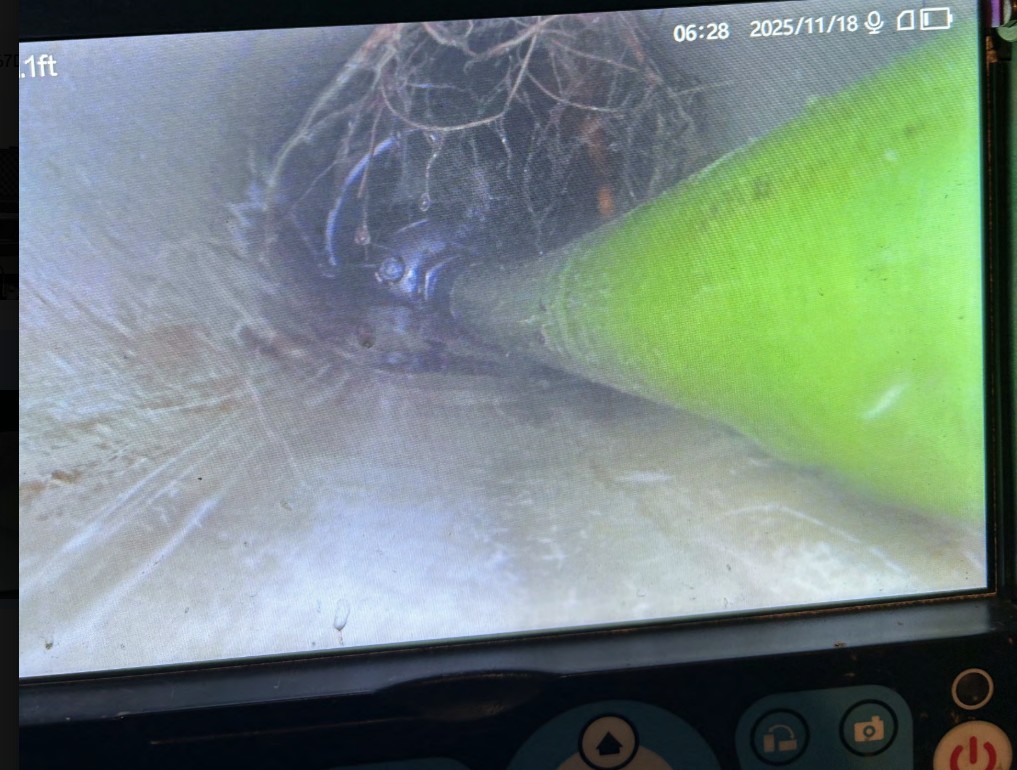
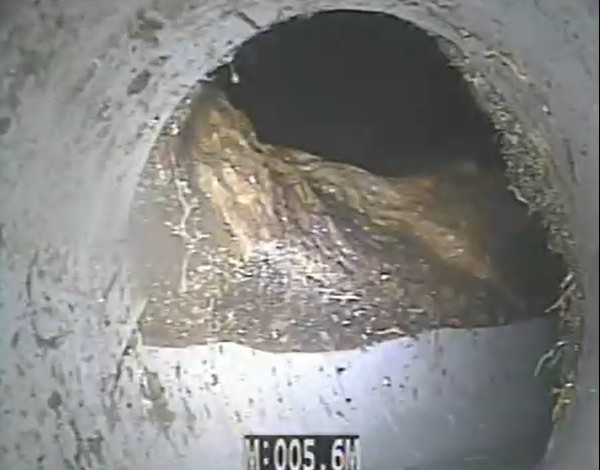
Everything above comes down to one question: what does the inside of your pipe actually look like? A sewer camera inspection answers it. A small camera runs the length of the line and shows the cracks, scale, root intrusion, and any sagging or separation, along with exactly where each problem sits.
That footage is what makes the recommendation honest. It shows whether the pipe still holds its shape well enough to line, how much cleaning it needs first, and what lifespan is realistic for your specific line rather than a general range. If lining is not the right call, the same footage shows that too.
Trenchless Sewer Repair FAQs
Does pipe lining make my pipe narrower?
Slightly, but it rarely matters. The liner is thin, and because it creates a smooth, seamless interior, water often flows better afterward than it did through the rough, scaled walls of the original pipe. Most homeowners notice improved drainage, not reduced capacity.
Is pipe lining a permanent fix or a temporary patch?
It is a structural repair, not a patch. A cured liner forms a new pipe wall inside the old one and carries its own strength, which is why it is rated in decades rather than years. It is only temporary when it is installed in a pipe that was never a good candidate.
Can tree roots get through a cured pipe liner?
Not through the liner itself. Roots enter through joints and cracks, and a cured liner is seamless, so those entry points are sealed. Roots can still cause trouble at connection points or in unlined sections of the line, which is why the original root source should be addressed too.
How long does the installation take?
Most residential jobs are completed in a day or two, depending on the length of the line and how much cleaning it needs beforehand. The camera inspection and prep work usually account for more of that time than the lining itself.
Does pipe lining make my pipe narrower?
Slightly, but it rarely matters. The liner is thin, and because it creates a smooth, seamless interior, water often flows better afterward than it did through the rough, scaled walls of the original pipe. Most homeowners notice improved drainage, not reduced capacity.
Is pipe lining a permanent fix or a temporary patch?
It is a structural repair, not a patch. A cured liner forms a new pipe wall inside the old one and carries its own strength, which is why it is rated in decades rather than years. It is only temporary when it is installed in a pipe that was never a good candidate.
Can tree roots get through a cured pipe liner?
Not through the liner itself. Roots enter through joints and cracks, and a cured liner is seamless, so those entry points are sealed. Roots can still cause trouble at connection points or in unlined sections of the line, which is why the original root source should be addressed too.
How long does the installation take?
Most residential jobs are completed in a day or two, depending on the length of the line and how much cleaning it needs beforehand. The camera inspection and prep work usually account for more of that time than the lining itself.
Getting a Straight Answer About Your Sewer Line
A liner that lasts 20 to 50 years is a real outcome, but it is not automatic. It comes from lining a pipe that was a good candidate, cleaning it properly, and curing the liner the way it was designed to be cured. That is the whole difference between a repair that outlives the plumbing around it and one that falls short.
If your drains are slowing down or you have been quoted trenchless work and want a second opinion, the honest starting point is a look inside the line. A&N Plumbing will show you what the camera finds and tell you plainly whether lining fits, or whether it does not.