
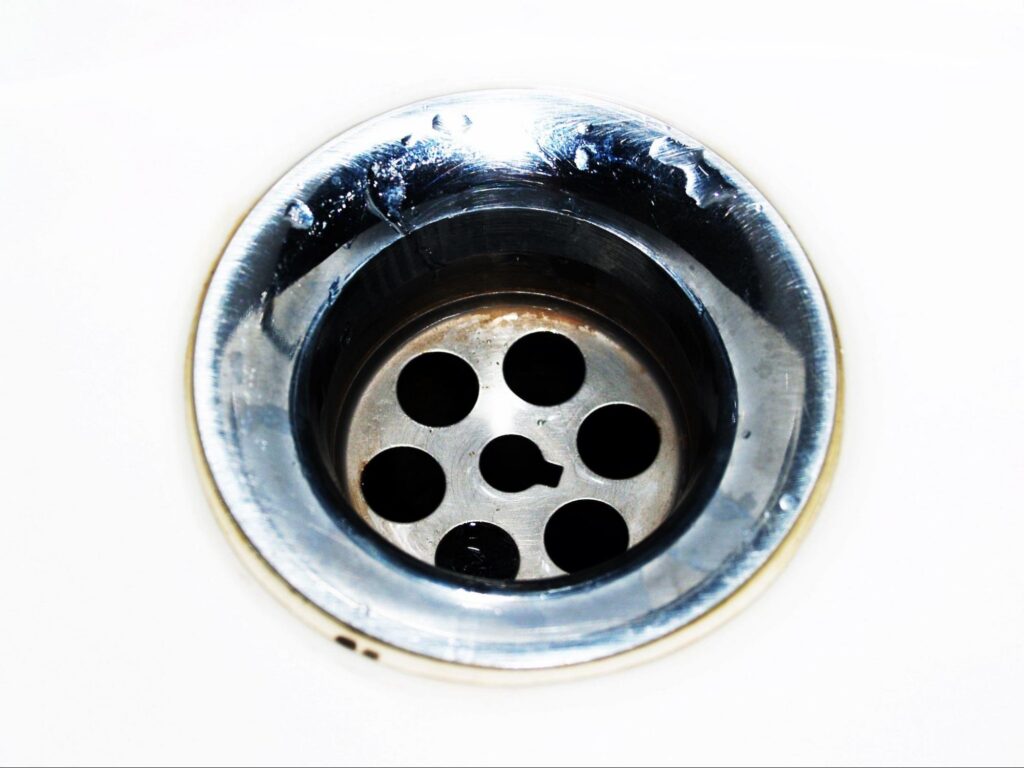
You walk in after a hot afternoon out, and something is off. A faint rotten-egg odor is hanging in the hallway, stronger near a bathroom or a floor drain, and it definitely was not there a few weeks ago. A sewer smell in the house has a way of taking over a room, and it tends to show up when you least expect it.
That smell is not random, and it is not just a nuisance. It is your plumbing system telling you that something meant to keep sewer gas out of your living space has stopped doing its job. Sometimes the cause is small and simple to handle. Other times it points to something deeper in the drain or sewer line that is worth a closer look.
Summer has a way of making the problem more noticeable. Heat speeds up what is already happening inside your pipes, and fixtures that go unused dry out faster, so odors that stayed quiet through the cooler months suddenly become hard to ignore. Below, we walk through what the smell actually is, why it gets stronger in warm weather, the common causes from simple to serious, and how to tell which one you are dealing with.
What a Sewer Smell in the House Really Means
The odor moving through your home is sewer gas. It forms as waste breaks down inside your drain and sewer lines, and the sharp rotten-egg note comes from hydrogen sulfide, the gas OSHA also refers to as sewer gas. Methane and other gases ride along with it, which is why the smell can read as sour or musty depending on the source.
You should never smell any of this indoors, because two things normally keep it out:
- Drain Traps: The curved section of pipe under each drain holds standing water that seals the line and stops gas from rising back up.
- Vent Pipes: A network of vents carries gas up and out through the roof, away from where you live.
When both are working, the gas leaves the way it should. So a sewer gas smell in the house usually means one of them has failed somewhere: a trap dried out, a seal broke, a vent clogged, or something deeper in the line needs attention.
The smell itself is not the problem. It is the signal pointing you toward it. The levels behind an occasional whiff are usually more unpleasant than harmful, though the source is still worth finding, which we get into below.
Why Summer Makes It Worse
Sewer smells exist year-round, but summer has a way of bringing them out. Warmer temperatures change how your plumbing behaves, and a few of those changes tend to line up at once.
Heat speeds up what is already happening. Warm pipes give bacteria a more active environment, so organic material breaks down faster and produces more gas. A smell that stays faint through spring can turn obvious once the temperature climbs.
Unused drains dry out. Every trap relies on a small amount of standing water to seal the line. In a guest bathroom, a basement floor drain, or any fixture that sits idle, that water evaporates faster in the heat. Once the trap is dry, nothing is left to block the gas and it rises straight into the room. This is the most common reason a house smells like sewer in summer, and often the simplest to fix.
Travel leaves fixtures sitting. Summer trips mean drains go unused for a week or two at a stretch, giving those traps plenty of time to dry out while no one is home to catch it.
Put together, these are why the question comes up far more in June and July than in the middle of winter.
Common Causes, From Simple to Serious
A sewer smell can come from something you can fix in five minutes or something happening well below the surface. Here are the usual causes, ordered from the simplest to the most serious, with what each one typically takes to resolve.
| Likely Cause | What It Usually Means | Typical Next Step |
|---|---|---|
| Dry drain trap | Water sealing an unused drain evaporated | Run water in the fixture to refill the trap |
| Dirty or clogged drain | Buildup of hair, grease, soap, and food in the line | Clear and clean the drain line |
| Worn toilet seal | The seal at the base of the toilet has failed | Reset the toilet and replace the seal |
| Blocked plumbing vent | A clogged roof vent forces gas back through traps | Clear the vent stack |
| Heavy buildup deeper in the line | Restricted drainage trapping waste and gas | Professional drain cleaning, sometimes hydro jetting |
| Cracked or root-invaded sewer line | Gas escaping from a damaged line underground | Camera inspection, then targeted repair |
The first few causes are minor, and a homeowner can often handle them. The ones lower on the list are where a professional comes in, since buildup deep in the line or a problem underground will keep coming back until the actual source is cleared.
Here is the catch. From inside the house, a stubborn clog and a cracked sewer line can smell exactly the same. The only reliable way to tell them apart is to look inside the line, which is what a drain camera inspection is for.
Smell Keeps Coming Back?
If the easy fixes do not hold, it may be time to look deeper in the line. A&N Plumbing can inspect the drain and trace the odor to the source.
What You Can Check Yourself, and What You Can’t
A lot of summer sewer smells come down to a short list of fixable things and a few that are not. Knowing which side you are on saves you time and tells you when it is worth making a call.
When You Can Handle It Yourself
These are the quick checks worth ruling out first. Each takes only a few minutes.
- Run water in every drain, including the forgotten ones. Guest bathrooms, basement floor drains, and laundry sinks dry out fastest. A cup or two down each one refills the trap and reseals the line.
- Clean the drains you use most. Hair, soap, and grease collect near the opening and hold odor. A basic cleaning often clears it.
- Check around the base of the toilet. If the smell is strongest there, or the toilet rocks slightly, the seal underneath may be the source.
If the odor fades after this, a dry trap or surface buildup was likely all it was.
When to Call a Professional
When the simple checks do not solve it, the cause is usually somewhere you cannot reach or see. These are the signs it is time to bring someone in.
- The smell keeps returning after you have refilled the traps and cleaned the drains.
- More than one drain is slow or gurgling at the same time, which points to a shared line, not a single fixture.
- The odor is strongest near a floor drain or in the basement, where gas from the main line tends to surface first.
At this stage, professional drain cleaning clears buildup deeper in the line that surface fixes cannot reach. If the smell holds on even after the line is cleared, it usually points to something structural further down, which is what the next section covers.
When the Smell Points to a Sewer Line Problem
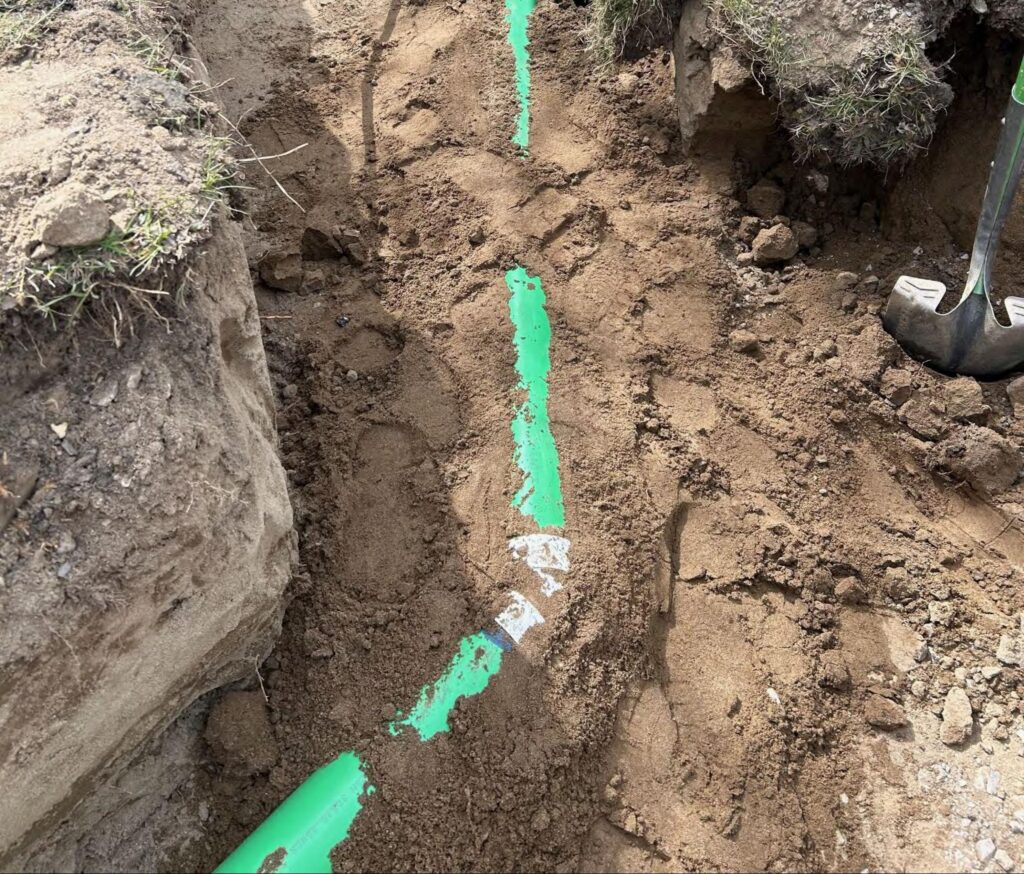
When the easy fixes and a thorough drain cleaning still have not solved it, a sewer smell that will not quit usually means the trouble is in the sewer line itself, several feet underground. That line carries everything out of your home, and once it cracks or separates, gas escapes from the damage and finds its way back up into the house. Aging pipe, shifting soil, and tree roots working in through a tiny opening are the usual reasons a line starts to fail.
The smell is rarely the only clue. A failing sewer line tends to show up as several slow drains at once, gurgling sounds, or a soggy, oddly green patch in the yard right above the line. When those signs come together, the odor is pointing at something structural, not a surface clog you can clear from inside.
This is where a camera inspection earns its place. Instead of guessing, it shows exactly where the damage is and how bad it has gotten, and the fix follows from there. A long run of cracking or root damage is often repaired with pipe lining, which rebuilds the line from the inside and spares you from digging up the whole yard.
Why does the sewer smell come and go?
A smell that comes and goes usually traces back to a drain trap that dries out, then reseals once the fixture gets used again. Weather plays a part too, since shifts in air pressure and wind can push gas back through the vents on some days and not others.
Why does only my bathroom smell like sewage?
When the odor stays in one bathroom, the cause is almost always local to that room. The two usual suspects are a dried-out trap in a tub or shower that rarely runs, or a worn seal at the base of the toilet letting gas slip past. Both stay contained rather than spreading through the house.
Is it safe to stay in the house with a sewer smell?
An occasional whiff is more of a nuisance than a health risk, and airing out the room while you track down the source is usually enough. A strong, constant odor is a different story, since higher levels of sewer gas can bring on headaches or nausea, and the gas is flammable, so that one is worth handling quickly.
Can tree roots really cause a sewer smell?
Yes. Roots are drawn to the moisture in a sewer line and push in through small cracks or loose joints, where they trap waste and let gas escape back toward the house. It is one of the more common ways an underground line starts to fail, which we get into in our guide to tree roots in sewer lines.
Sewer Smell Questions Homeowners Ask in Summer
Why does the sewer smell come and go?
A smell that comes and goes usually traces back to a drain trap that dries out, then reseals once the fixture gets used again. Weather plays a part too, since shifts in air pressure and wind can push gas back through the vents on some days and not others.
Why does only my bathroom smell like sewage?
When the odor stays in one bathroom, the cause is almost always local to that room. The two usual suspects are a dried-out trap in a tub or shower that rarely runs, or a worn seal at the base of the toilet letting gas slip past. Both stay contained rather than spreading through the house.
Is it safe to stay in the house with a sewer smell?
An occasional whiff is more of a nuisance than a health risk, and airing out the room while you track down the source is usually enough. A strong, constant odor is a different story, since higher levels of sewer gas can bring on headaches or nausea, and the gas is flammable, so that one is worth handling quickly.
Can tree roots really cause a sewer smell?
Yes. Roots are drawn to the moisture in a sewer line and push in through small cracks or loose joints, where they trap waste and let gas escape back toward the house. It is one of the more common ways an underground line starts to fail, which we get into in our guide to tree roots in sewer lines.
The Smell Is Worth Listening To
A sewer smell almost always means something, even when that something is as small as a trap that needs refilling. Running the simple checks first is never wasted effort, and more often than not, that is the end of it.
When the smell keeps returning, it is telling you the cause sits deeper than a quick fix can reach. That is the point to have it looked at, and A&N Plumbing can trace the odor to its actual source and tell you plainly what the line needs, nothing more.